

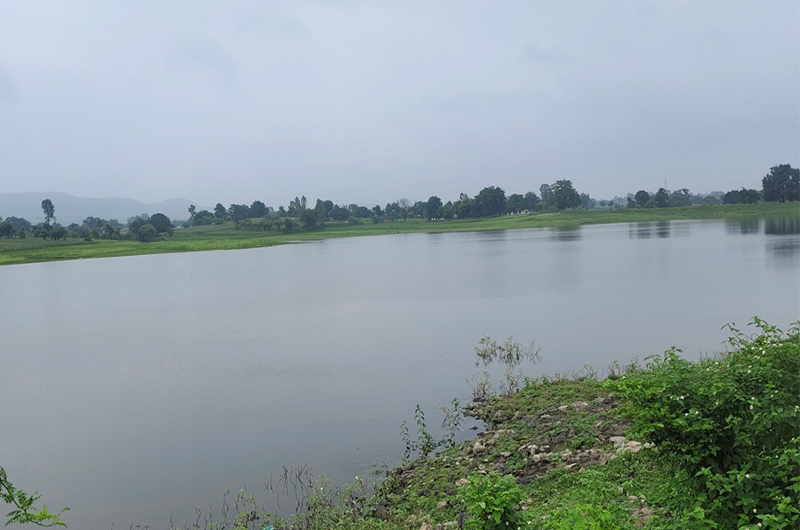
The spirit of cooperation may not be captured by statistics, but is very important for rural development, says Bharat Dogra, adding that high levels of cooperation, community spirit and solidarity must get the attention they deserve, after he observed all this at close hand in Jhikali Village in Rajasthan
Jhikali Village in Banswara District of Rajasthan has relied on a large pond for its irrigation needs for as long as the Bhil Adivasis (tribal community) who live here can remember. But recent large-scale seepage has alarmed farmers – they know that if it continues, the pond will be almost incapable of providing the water they need. Fortunately, the women here are very well organised into a self-help group or saksham samooh under the guidance of voluntary organisation Vaagdhara.
Paskali, an active member of this group, told this writer, “The panchayat was asked to take up urgent repairs but when it did not respond adequately, we mobilised our resources and reiterated the demand repeatedly. After continuous pressure, the panchayat finally agreed to take up the repair work.” However, it was not completed properly, and the villagers realised that unless follow-up work was done immediately, whatever gains had been achieved would be short-lived.
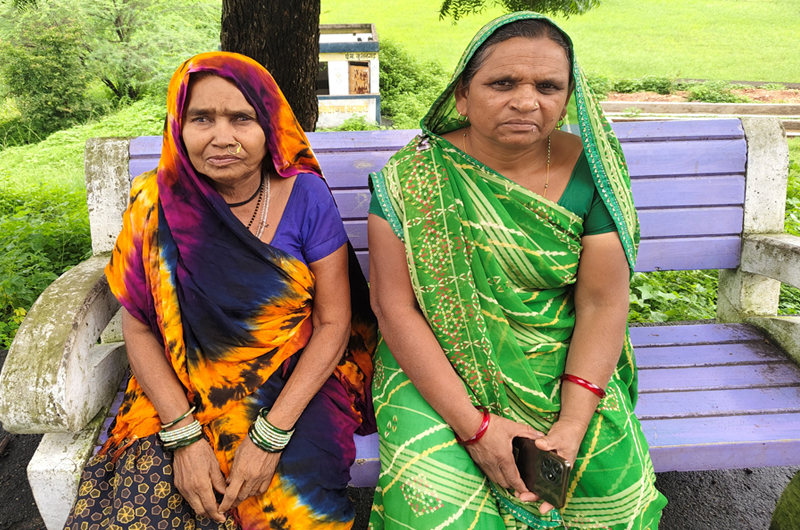
To complete the work, stones had to be fetched from some distance. Several villagers, particularly women, decided to get together and finish the work on their own. As Sakka, another member of the saksham samooh, recalls, “a very strong spirit of solidarity and cooperation kept us going although the work was quite difficult.”
What made it possible for the people to mobilise so readily? The villagers explain that there is a traditional system of helma in tribal communities which fosters cooperation and mobilisation for welfare. At an individual level, if a villager finds himself unable to manage the workload on his farm, other villagers volunteer help. On a community level, when there is a common welfare cause, members of all or many households come together to carry out the necessary work without any remuneration. It is this community spirit which enabled the Jhikali villagers to sort out the seepage problem before it could become a serious issue for the farming community.
The tradition of cooperation has also helped the villagers to put a stop to a growing threat. “Some time back, we realised that our farming costs, our crop failures and other problems were increasing,” says Paskali. “On introspection, we found that it was because we had given up our traditional systems which were more in accordance with our needs. This was confirmed when we went to meetings organised by Vaagdhara. Getting organised into saksham samoohs helped. We were able to go back to natural farming methods and conserve seeds.”
She says that though some big farmers are still want to continue with market-purchased chemical fertilisers and hybrid seeds, most small farmers, including saksham samooh members, have gone back to the traditional practices of natural farming and seed conservation. Members of the community exchange seed varieties among themselves, and thus save on expenses.
(The writer is an independent journalist and author who has been writing for over five decades, providing a strong perspective on peace, justice and protection on the environment. He lives in New Delhi.)
 from Webdoux