

In Haryana and Uttarakhand, farmers are adopting modern methodology to increase their yield, guided by the SM Sehgal Foundation, an NGO that came up with the Farmers Field School initiative. About 200 farmers, especially small and marginal famers who have little or no knowledge about modern techniques and procedures and efficient use of inputs, have benefitted and they have adopted techniques such as using seeds of high-yielding varieties. The initiative has helped raise the income of these farmers and empowered them economically as well as socially. Sarita Brara reports
Till a few years ago, Bharat, a famer of Songaon Village in Uttarakhand, had to work as a daily wage labourer despite owning two-and-a-half acres of agriculture land. The income he earned from cultivating his terraced fields in the hills was not enough to make both ends meet. Today, Bharat is not only able to earn a decent income from growing vegetables and other crops on his land, he helps other farmers adopt modern methodology to increase their yield, thanks to new agriculture techniques and crop diversification, with guidance from the SM Sehgal Foundation, an NGO which used his land to start a Farmers Field School.
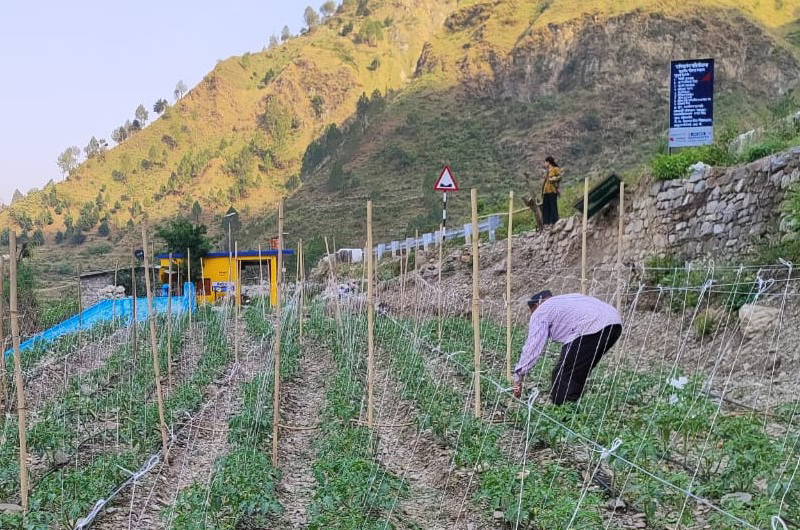
“Agro experts from SM Sehgal Foundation introduced me to the sahu variety of tomatoes which grow on vines that are tied to bamboo sticks six to seven feet high. I was able harvest more than five kg of tomatoes from a single plant!” says an excited Bharat. Having no knowledge of high-yield varieties, he was earlier buying whatever seeds were available in the market and harvesting not more than a quintal or two, compared to the seven to eight quintals the same piece of land yielded this year.
Also, now Bharat grows other vegetable such as capsicum, brinjal and green chilli, in addition to wheat, paddy and other local grains. As a first-time cultivator of capsicum, he was able to sell 50 to 60 kg of the vegetable. Because of diversification, Bharat is able to put to use all his terraced fields, many of which were left unutilised earlier. In addition, there is a huge demand for saplings that he has raised with the help of the NGO – he takes advance bookings from farmers in his and neighbouring villages in Nainital District for various quantities of different types of saplings.
Like most farmers in the area, Bharat had to depend on rains for irrigation earlier, as there are no water bodies close to his land. Now, he practises drip irrigation using a pond built on his land by the NGO to collect rain water. Bharat uses his experience to guide other farmers who have started storing rain water in small ponds too. “At least 500 farmers have visited the Farmers Field School on my land and over 200 have benefitted from my experience and adopted techniques like using seeds of high-yielding varieties, says Bharat. Some farmers have invested in power weeders for tilling and weeding their lands, and rent out the equipment to others too, creating a win-win situation.
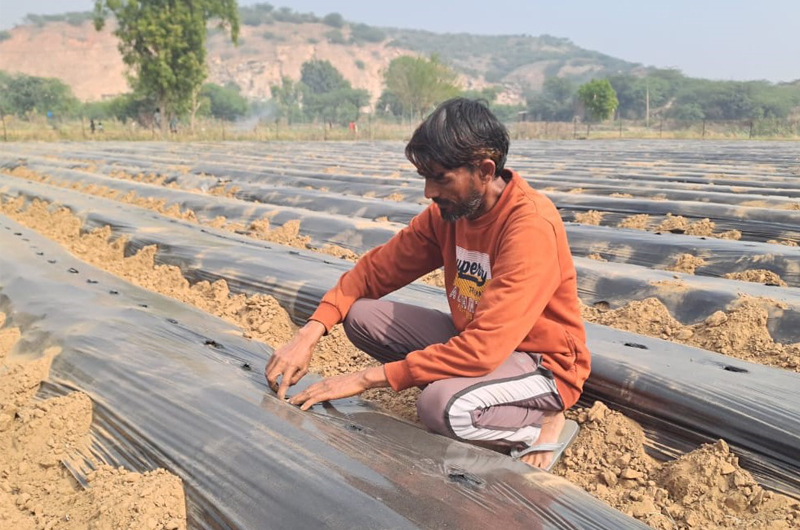
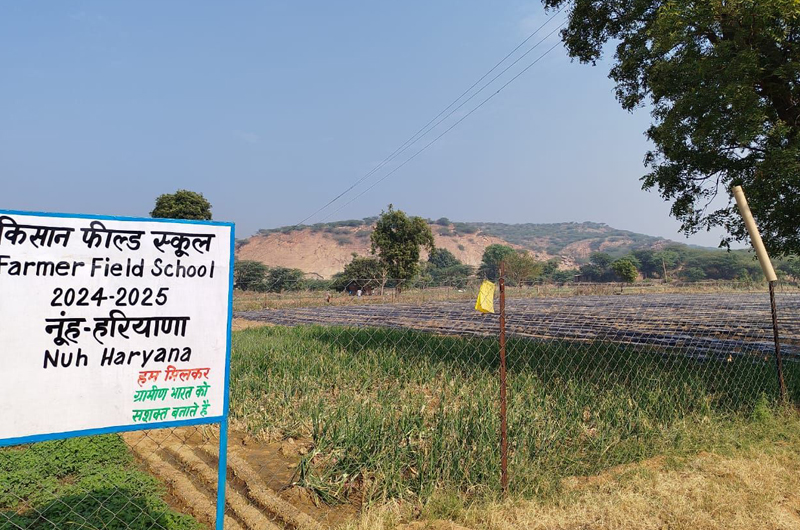
Ram Kishore, an agro expert on the team that works for SM Sehgal Foundation, says the Farmers Field School concept was piloted in 2020 in Haryana’s Nuh District, and almost all the villages there have been covered. Basai, at the foothills of the Aravallis, is one such village. Till a year-and-a-half ago, the mostly small and marginal famers here had little or no knowledge about modern techniques and procedures and efficient use of inputs. Theirs was a hand-to-mouth existence. In April 2023, Jamshed Khan’s one acre of land was selected as a Farmers Field School to demonstrate how certain techniques and inputs and a little hand-holding can transform agriculture and increase farmers’ income substantially.
To establish the difference in results between conventionally used DAP (diammonium phosphate) urea and other micronutrients, Jamshed’s plot was divided into two parts, and one type of fertilisers was used on each half. A total of 520 kg of bajra was harvested from the portion using DPA urea, while the plot under micronutrients yielded 640 kg. The farmers in the village, too, learned about crop diversification and drip irrigation, and have used them to increase their yield and income. Sunny, one of the farmers who learnt from the Farmers Field School, says they are now able to save 60 to 70 per cent of water because of drip irrigation. The famers are also encouraged to use solar and electric spray pumps, which save both energy and time. It used to take 45 days to till the land, now it takes only 25, Sunny adds.
more than five kg of tomatoes from a single plant now. He grows other vegetable such as capsicum, brinjal and green chilli, in addition to wheat,
paddy and other local grains.
Yet, another technique that the farmers found useful is mulching, demonstrated on Jamshed’s land. It helped tackle the menace of weeds. Women farmers Sanjeeda and Vakila recall how most of their time was earlier wasted in removing the weeds hampering the growth of their crops. The women are members of the village developments committees. Though they themselves are not educated, they see to it that their children, including their daughters, are sent to school. And as Jamshed says, it is the womenfolk who hold the purse strings, and take financial decisions. Their empowerment shows in the confidence with which Sanjeeda speaks.
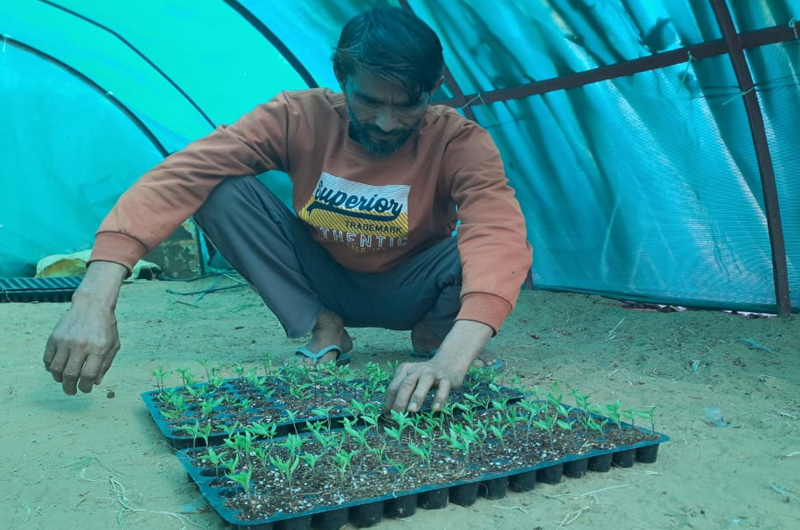
The farmers were also taught how to raise nurseries on their fields, growing saplings of different vegetables on trays which can be shifted to shelters during winter, to prevent frost damage. Cooperation is encouraged. Only five of the farmer families in the village have tractors. Sabir Khan, with three acres of land, is one of them. He rents out his tractor to other farmers.
SM Sehgal Foundation has been working in Haryana for over 25 years. Local participation and sustainability are the watchwords of their initiatives. Apart from Uttarakhand and Haryana, the concept of Farmers Field Schools is being spread across Uttar Pradesh and Telangana as well. The initiative has helped raise the income of small and marginal farmers and empowered them economically as well as socially. Apart from the Farmers Field Schools, the Foundation has climate-smart interventions on its agenda, apart from horticultural development, livestock and water management, and the use of information and communication technology in agriculture for overall rural development.
(The writer is a senior journalist who divides time between Delhi and Shimla.)
 from Webdoux