

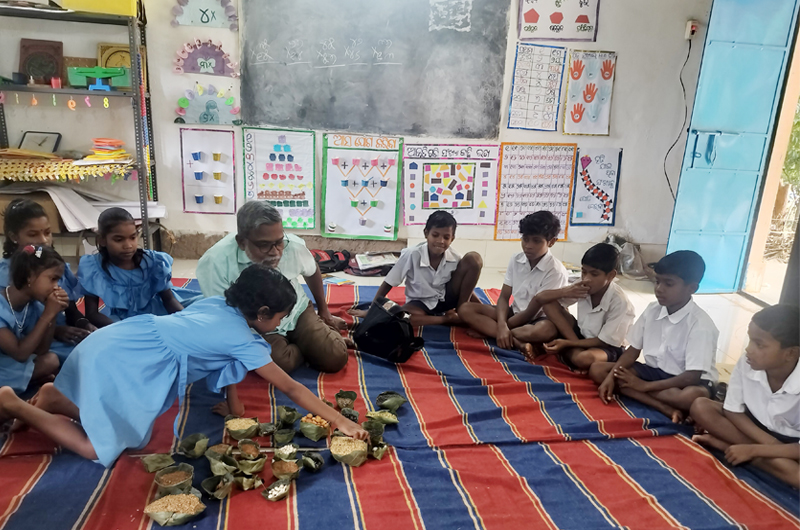
Two government schools in Odisha are following NGO Ekta’s lead and helping tribal children find pride and meaning in acquiring knowledge. The classrooms here are nurturing more than educatiing – they are sowing confidence, cultural pride, and a deeper bond between learning and life, says Ipsita Ruchi, adding that the model has the power to inspire many other schools across the region and beyond
In the quiet folds of Mujanga Gram Panchayat in Odisha’s Koraput District, two government schools – Tentuliguda Project UP School and Punjisil Primary School – are showing how education becomes meaningful when it is rooted in the children’s native culture, language and environment. The classrooms are vibrant spaces where creativity, local wisdom and linguistic diversity are woven into the curriculum.
The National Education Policy emphasises teaching children in their mother tongue under the Foundational Literacy and Numeracy Programme. Yet, most tribal children face barriers since schools rarely have teachers fluent in their local languages. For children with no exposure to Odia, learning in an unfamiliar tongue becomes a daunting challenge.
To bridge this gap, non-governmental organisation Ekta has adopted a dual approach. The first is through open learning centres, where volunteers engage children in regular activities and involve parents and elders in helping them develop basic Odia skills, easing their transition into formal schooling. The second is the use of the Srujan Curriculum in schools. Originally introduced by the Government of Odisha as a pilot, the programme was designed to link school lessons with community knowledge. It emphasises creative activities, hands-on learning, skill development, and cultural engagement. Teachers are trained and encouraged to integrate this approach into their daily practice.
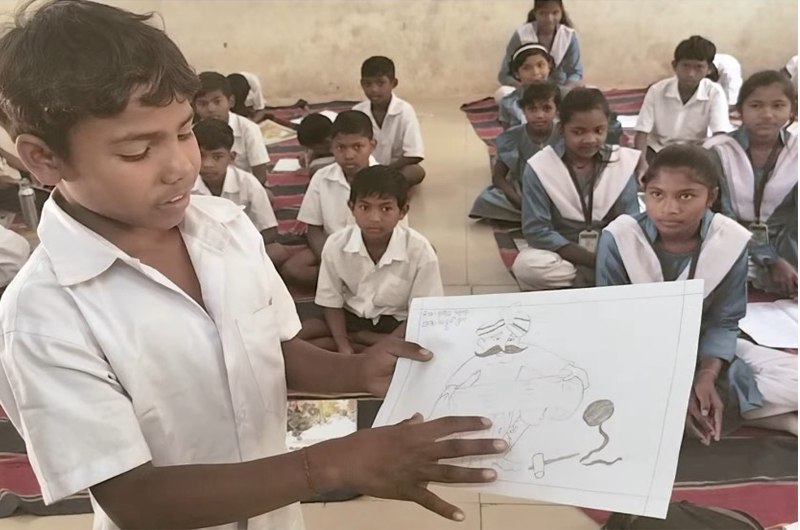
Tentuliguda Project UP School has just 62 students from Classes 1 to 8, taught by three dedicated teachers – Mamata Sahoo and Malati Swain, both from outside the community, and Headmaster Iswara Jani, a Paraja teacher trained in the Srujan model. “We have been implementing this child-centric curriculum since 2017 guided by Ekta,” the teachers shared.
On a recent visit, the students were seen pouring their imagination onto paper – sketches of children playing bati (marbles), hills at sunrise, artisans making drums, and village roads. The young artists proudly described their work in Odia, eager to express themselves despite the challenges of language.
Language itself has become a joyful exercise here. Class 8 student Ketaki Bhoi confidently recited the names of months in the Paraja language, and her classmates matched them with Odia equivalents. Later, in an animated discussion, the children explained why their village is called Tentuliguda – home to numerous tamarind trees. They listed other trees used for shade, fruit, and medicine, and named nine types of fish in the nearby river. Their pride in their knowledge was plain to see. This model, combining community involvement with child-friendly pedagogy, has significantly improved attendance, retention, and meaningful participation in schools.
Just a few kilometres away, Punjisil Primary School demonstrates a similar synergy of tradition and science. With five classes and two teachers commuting daily from Koraput, the school faces constraints, but the children, mostly from the Paraja Community, carry their heritage proudly into the classroom.
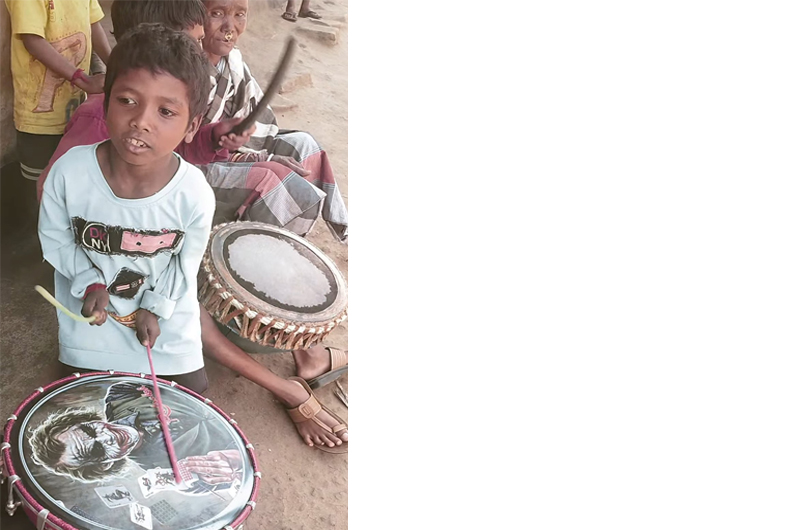
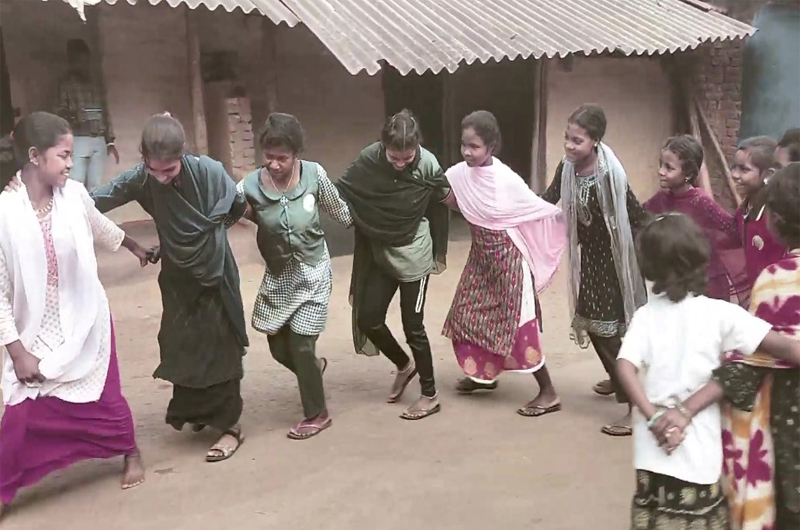
And it is this joy that you find in the faces of the children here – a tribal boy playing the drum and (in the picture below) girls singing tribal songs and dancing.
In one activity, students brought local agricultural seeds collected from their families’ fields. They named them first in their mother tongue, then sorted them into oilseeds, pulses and millets. When prompted, they even linked the crops to nutritional values – carbohydrates, protein, iron – demonstrating how home knowledge connects with science. Guided by teachers, the activity became a bridge between indigenous wisdom and modern learning.
By encouraging children to learn through both their mother tongue and Odia, the approach by Ekta has reduced dropout rates and improved learning outcomes. Teachers and community members alike acknowledge Ekta’s role in addressing the language gap. Activities such as documenting farming practices, folk songs and cultural traditions have reconnected children with their roots. Parents now see schooling not only as meeting the literacy goal but as a way to preserve and revive cultural identity.
What the children of Tentuliguda and Punjisil reflect are lessons that go beyond textbooks. They are not simply memorising, they are connecting learning with their culture and environment. What stands out here is the pride the children feel, when their local knowledge is valued. The integration of native language, cultural references, and lived experiences with classroom lessons creates not just learning but joy – a crucial reminder of how education becomes meaningful when rooted in a child’s world. These classrooms are nurturing more than education – they are sowing confidence, cultural pride, and a deeper bond between learning and life. This model has the power to inspire many other schools across the region and beyond.
(The writer is pursuing a PhD in English at CV Raman Global University, Bhubaneswar, after acquiring an MPhil degree in English from Berhampur University, Odisha. Drawn towards tribal life and livelihoods, she frequently visits various tribal regions of Odisha, especially interacting with children to understand the environments in which they learn. This story emerged from her visit to Koraput District while she was documenting the education and culture of the tribal communities there.)
 from Webdoux