

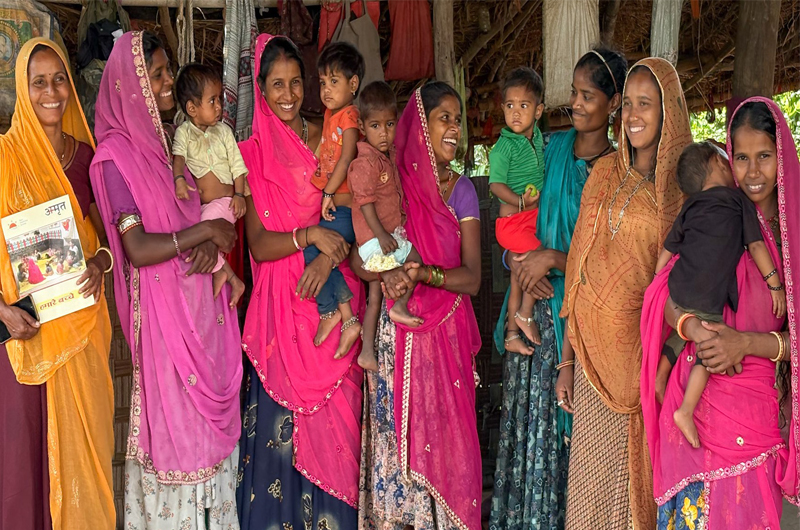
Basic Healthcare Services, a 13-year-old voluntary organisation has been rendering yeoman service in making medical care accessible to the poorest of the poor in marginalised areas of Rajasthan’s Udaipur, Salumbur, Banswara and Dungarpur Districts. While the initiative has already helped save thousands of lives, efforts to improve it further, conceptually and at the implementation level, must continue, says Bharat Dogra, who recently visited and brings us this inspiring story
Young Pemli Bai is a very important member of the tribal community which calls the remote hamlet of Majavad Khera in Rajasthan’s Udaipur District home. Village women know that they can approach her to obtain an ORS packet, contraceptives, common medicines for reducing fever, or even a pregnancy test. However, what they value most is that she can be contacted in a healthcare emergency at any time, and will arrange ambulance services or organise treatment.
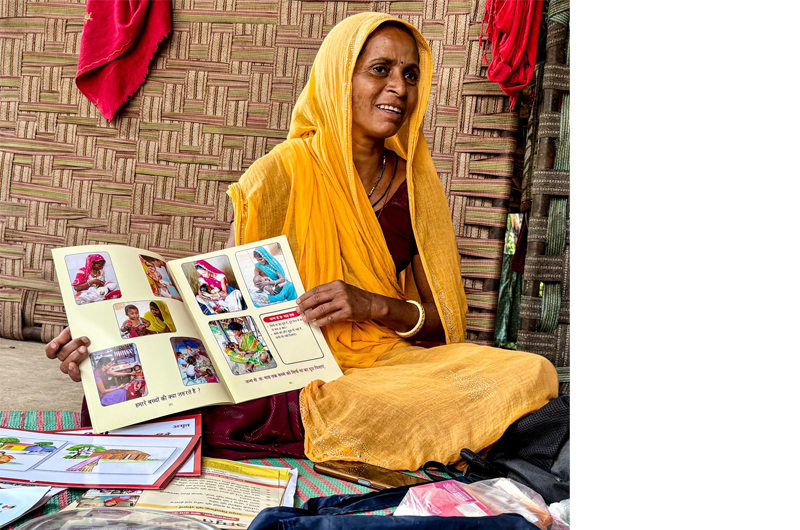
organise treatment. She not only educates women on nutrition, health and contraception, she also visits homes
to discover if anyone has serious health problems. Photo: Kamlesh Sharma.
Making health care accessible in such a remote place can be quite a challenge, and Pemli is part of a group of community-based women health workers known as swasthya kirans or SK (translated as a ‘rays of health’) linked to the Amrit clinics set up in South Rajasthan by Basic Healthcare Services (BSH), a voluntary organisation. Pemli not only educates women on nutrition, health and contraception, she also visits homes to discover if anyone has serious health problems.
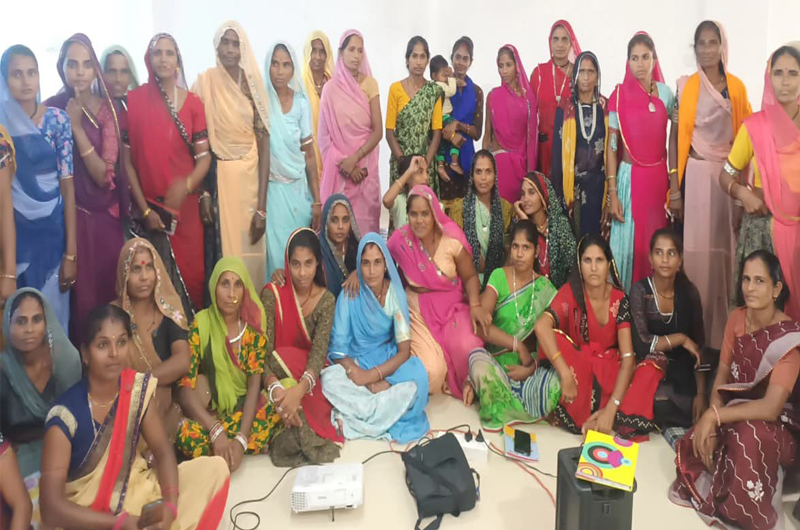
When this writer visited a training centre in Salumbur District (southern Rajasthan) for SKs like Pamli, he found they were taught to identify and help high-risk pregnancies, reduce maternity risks and how to respond to various difficult health situations. Interactions with the SKs showed that they were alert and conscious about health and social issues. Laali of Budhel Village, another SK, was very articulate about policy steps that can be taken to help villagers facing health issues. Several SKs said they would be happy to be part of even wider social reform efforts to reduce consumption of liquor and other intoxicants by their fellow villagers.
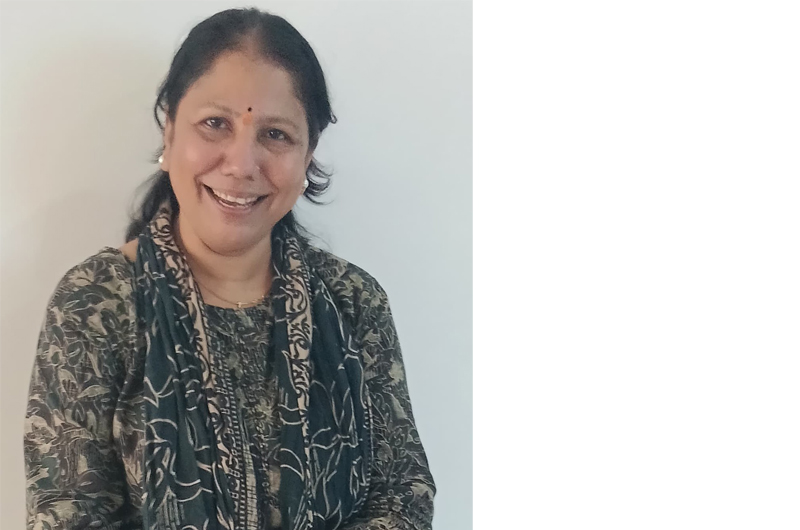
health services at a government primary health centre. Nurses like her are committed to their
work and are kind and patient. Photo: Bharat Dogra.
The BSH initiative can be said to be based on the Amrit approach or Amrit clinics, started in 2012 in South Rajasthan. Over the past 13 years, despite facing challenges old and new, it has saved thousands of lives. Dr Pavitra Mohan, co-founder and director of BHS, had previously led UNICEF’s Child Health Programme in India. He emphasises three aspects of such initiatives: prioritising the health needs of the poorest of the poor – the ‘last person’ should get ‘first priority’; recognising the right to health of all people; and a highly participative modus operandi, so that the community’s real and priority needs can be properly understood and addressed. He feels wider social and development aspects should be well integrated with the health and nutrition effort, along with the preventive, promotional, treatment and rehabilitation segments.
BHS has six Amrit clinics in Udaipur and Salumbur Districts, mainly in villages where tribal communities constitute most of the population and are characterised by high levels of poverty, malnutrition, disease burden and migrant labour. After considerable discussion, it was decided that each clinic would be led by nurses, helped by a weekly visit by one or two physicians, apart from the availability of BHS doctors for consultations on audio or video calls at any time. SKs formed part of the team.
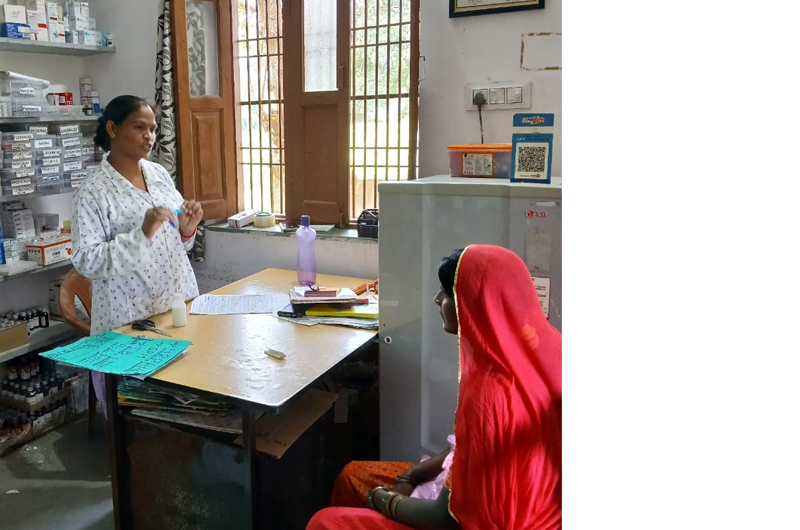
the nurses are also available for night-time emergencies. Photo: Bharat Dogra.
Each Amrit clinic has a group of four nurses. The women, who have qualified from recognised institutions, are selected, broadly speaking, from within the communities with which they work and, hence, are familiar with the socio-economic conditions and cultural norms of the people, and sympathetic to their needs. They are given further training by BHS. Apart from attending to patients at the daytime clinics, the nurses are also available for night-time emergencies. At the clinic in the hard-to-reach Rawach Village, nurses told this writer that on a normal day they get about 40 to 50 patients while on the day of the doctors’ visit, the number goes up to about 150.
Another BHS co-founder and director, Dr Sanjana Mohan, a pediatrician who has been involved with health research, emphasises that in such people-based health initiatives, dignity and trust – of both patients and healthcare providers – are very important. Patients even from the poorest households can be sure that they will be treated with kindness and patience at the Amrit clinics, and the nurses are provided secure and encouraging conditions, including residential accommodation close to the clinic, leave to catch up with their families, and opportunities of professional advancement. Above all, there is a sense of contributing to a noble cause, and a strong sense of solidarity with the organisation and team members.
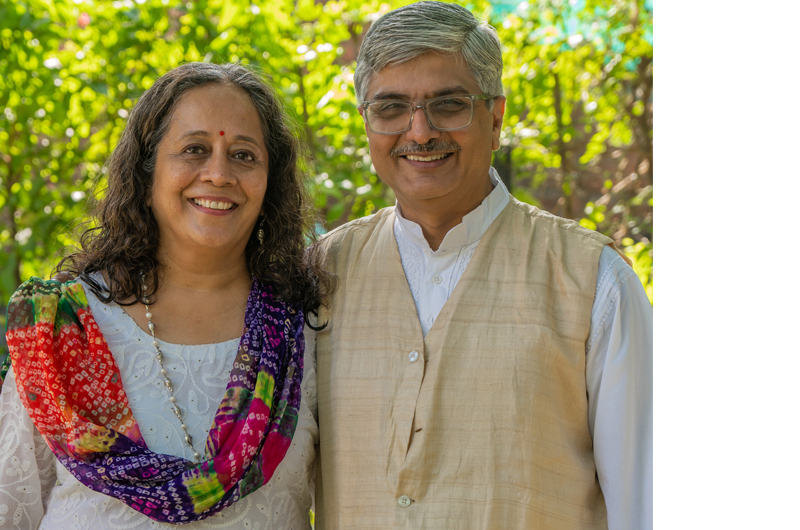
Programme in India. Dr Sanjana, a pediatrician, has been involved with health research as well. Photo: Bharat Dogra
No wonder that Banswara and Dungarpur Districts of South Rajasthan have seen several girls from tribal communities qualifying as nurses in recent years. Himmat, an Amrit nurse, remembers with pride a girl, Jivi, from a very poor household who was bedridden and whose parents had lost hope. Himmat persisted in taking her for treatment and physiotherapy and to her parents’ great joy, one day, the little girl started walking. Today, she goes to school. Chandrabhanu, another nurse, is a two-time cancer survivor, but continues to contribute significantly to improving health services at a government primary health centre helped by the BHS. She has also advanced professionally to be the mentor to nurses of three clinics.
Dr Vidit Panchal, one of the rare breed of doctors ready to be based in remote locations, and who, at a young age, has acquired a well-deserved reputation for his commitment to serving such communities, works at three of the Amrit clinics. He says even if a doctor does decide to work in such remote areas, the approach of employing nurses from the target patient community would still be relevant and desirable in terms of the self-reliance and confidence this brings to the villagers.
Young nurse Ganga, working in the Bagdunda clinic, remembers a phone call from a man saying that his wife had developed labour pains while they were walking to the clinic, and was lying on the roadside. Ganga rushed to the spot on a health worker’s motorcycle and managed to save both the mother and the baby, following telephonic instructions from BHS doctors. The health workers are part of the Amrit mode – they assist the nurses and SKs at the clinic. As in the incident narrated by Ganga, male health workers with motorcycles help nurses reach patients who need follow-up or other care. The nurses refer patients with more serious problems to hospitals in Udaipur where a BHS staffer is specially posted to provide any help the patients need, particular at the initial stage of hospital admission.
According to Kamlesh Sharma, who coordinates important aspects of community mobilisation in this initiative, a health advisory committee has been constituted in various villages or panchayats, involving all those likely to make a significant contribution to this effort. Women health workers in all villages in the coverage area are selected. Peer support groups are organised (particularly important in the context of TB patients). To secure integration with wider social and health objectives, partnerships have been worked out with other voluntary organisations like Seva Mandir, Arth and Gramshree (for livelihood and nutrition support) and Aajeevika Bureau headed by Rajiv Khandelwal, another BHS co-founder, who has been appreciated for his many-sided welfare and mobilisation efforts for migrant workers. His contribution has proved specially helpful to Amrit as the region is known for its concentration of migrant labour, and health issues specially associated with this segment.
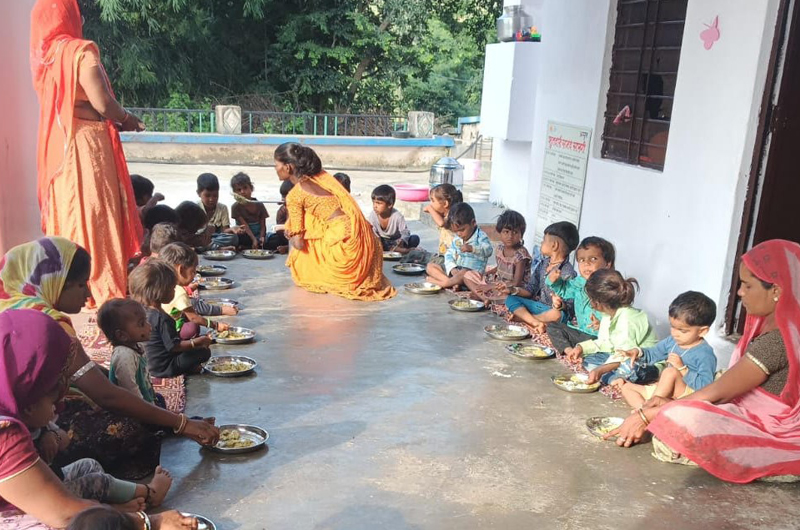
Reducing malnutrition in areas of high vulnerability is an important challenge on the health and nutrition front in India, and this is a focus of the Amrit clinics. Certain categories of those suffering from serious malnutrition, including children, are given supplements, and TB patients are given nutritious food for the duration of their treatment. Seventeen phulwaris or child nutrition and play centres have been set up, to cater to young children for about seven hours. They are served three meals of khichdi, sattu (with gram flour as the main ingredient) and eggs. The kids also pick up some learning and hygienic habits.
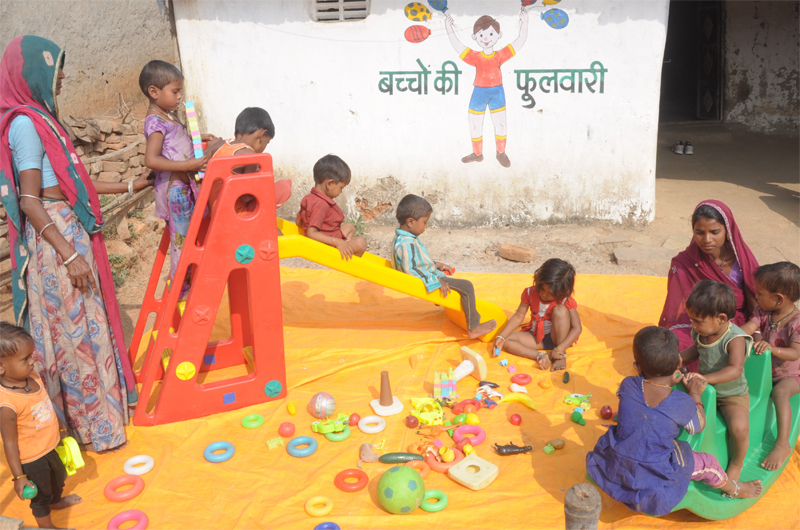
children for about seven hours. They are served three meals of khichdi, sattu (with gram flour as the main ingredient) and eggs. The children also
pick up some learning and hygienic habits. Photos: Bharat Dogra.
In addition, households are encouraged to cultivate kitchen gardens by providing seeds, and helped to improve livelihoods by rearing poultry and goats. There is strong logistics support from the BHS head office to ensure ready supply of medicines and other requirement. Three out of six clinics are able to provide X-ray reports on the same day with the help of a portable X-ray machine. Efforts to arrange for this facility in other clinics are in progress. Most lab tests are available at the clinics and there are arrangements with other labs too for prompt and speedy testing.
At present, a patient typically has to pay Rs 50 for a weekly consultation, including supply of medicines for the week. This often has to be subsidised by the organisation. Importantly, no one is refused care because of inability to pay. Once it is established that a patient doesn’t have the resources to pay for care, various charges are waived. This low-cost model can serve people even better if the benefits of free government medicine schemes, maternity benefit schemes and other schemes are linked to it.
The Amrit approach has provided a promising model. One of its clinics, despite the very remote location, has been accredited for safety and quality by the National Accreditation Board of Hospitals and Health Care Providers. The results of this approach during the past 13 years have been encouraging, including in terms of success in treating diseases such as TB, and reducing maternal mortality and serious malnutrition.
(The writer is an independent journalist and author who has been writing for over five decades, providing a strong perspective on peace, justice and protection on the environment. He lives in New Delhi.)
 from Webdoux