

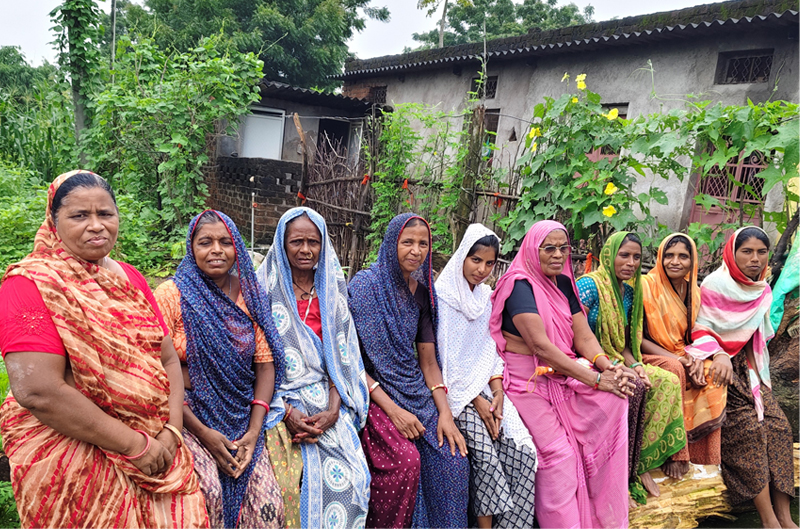
A combination of traditional wisdom and scientific methods is helping a tribal community to improve nutritive and economic profiles, says Bharat Dogra, who recently visited Amlipara, a Rajasthan village. With a farming pattern which almost eliminates fossil fuel use, protects and conserves soil and grows more trees, the village is a model for climate change mitigation, he says
Anita Damor is a farmer of Amlipara Village, in Rajasthan’s Banswara District, but she’s no run-of-the-mill cultivator. Her land is a fine example of ecologically protective farming and self-reliance in villages – so much so that she was invited to speak about progress in this direction at a national conference on village self-reliance.
During a recent visit to the village, where this writer met Anita and about a dozen other women, it became clear that while Anita is the group leader, the others adopt similar methods, and they all work closely together to adhere to the discipline of natural farming, including avoiding use of chemical fertilizers or pesticides. The women prepare organic manure on their own farms.
They all own only small plots of farmland, generally between one and two acres (besides small kitchen gardens), but grow a great variety of crops in the limited space. Anita, for example, cultivates around 30 crops belonging to the cereal, millet, pulse, oilseed, spice and vegetables categories, and has some fruit trees as well. The families of these women are largely self-reliant in terms of nutritious food, and also have a little surplus for sale.
The women save the seeds of their traditional varieties of crops, obviating the need to buy hybrid seeds from commercial outfits. Anita proudly displayed the different seeds she has saved for the next year. This is a very important part of their self-reliance. As Sarita, another woman of the group, says, their experience has proved that the seeds they save and preserve themselves are the most productive.
Significantly, these farmers avoid the use of tractors and other expensive machines. Bullocks are used to plough the fields, for threshing and carrying loads. Bullocks are highly valued in these households. Farming is well-integrated with animal husbandry. Anita has two bullocks, two calves, one buffalo, eight goats and several poultry birds. They also process most of the crops themselves, using simple implements available in the village, instead of outsourcing this facet of farming. The side benefit is that organic crop residues are available as healthy feed for their cattle.
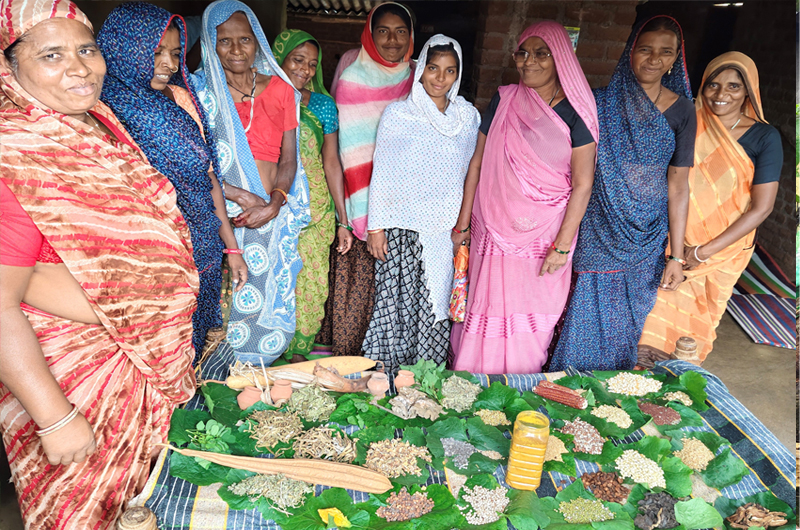
usually saved for the following year, and forms a very important part of their self-reliance, says the writer.
There are high levels of cooperation among various households and particularly among women. When extra work is needed at a farm, women get together to contribute voluntary work. They also exchange seeds. The strong bonding also helps them to get together to effectively raise their voices for government support. Their demand for a solar-pumping set to lift water from a local rivulet for irrigation was granted and they were also able to get employment opportunities under NREGA, adding to livelihood and development opportunities in the village.
These households place a lot of emphasis on education. All the women reported that their children were going to school. Two women said their daughters had received Scooties (two-wheeler vehicles) as prizes for having done very well in their high school exams, and this was helping them in accessing higher education.
With a farming pattern which almost eliminates fossil fuel use, protects and conserves soil and grows more trees, the village is a model for climate change mitigation. Its overall pattern is cyclical, with wastes returned to soil, increasing fertility consequently increasing food production. Voluntary organisation Vaagdhara has been providing the women of the village strong support. As Sarita said, “Due to a number of reasons, the village was moving away from it rich traditions. But Vaagdhara helped us understand the wisdom of protecting our roots and the results have been really good for us.”
Vaagdhara helped these women form a self-help group or saksham samooh to coordinate their activities and take forward their common livelihood concerns in a more organised way. Jayesh Joshi, founder-director of Vaagdhara says, “We don’t go to villages only to teach something. We go with a spirit of learning. This enables us to have a good understanding of the richness of the traditional wisdom of tribal communities.” This approach enables them to combine tradition and modern science to develop a system which is not disruptive and is mindful of local needs and environmental conditions. This is in variance to the tendency to regard tribal communities as backward, thus missing what can be learnt from the simple villagers.
(The writer is an independent journalist and author who has been writing for over five decades, providing a strong perspective on peace, justice and protection on the environment. He lives in New Delhi.)
 from Webdoux