

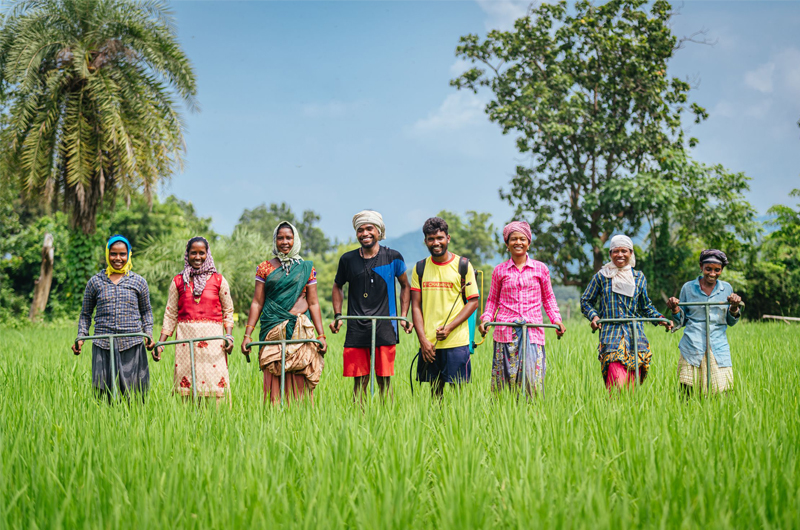
After spending over three decades working with rural communities across India, one lesson has become inescapably clear to Crispino Lobo, co-founder and managing trustee, WOTR: Behaviour change is rarely a matter of choice. People don’t adopt new practices because they are ideal or desirable. They do so because the world as they know it is no longer tenable. The deeper the threat to their way of life, the greater the likelihood that change will occur (so well said). In this article, Lobo hits the nail on its head, with several thought-provoking points
Change is not something people naturally gravitate towards. It is something they grow into when they have no other choice. This insight has surfaced repeatedly over the years. I have seen it not only in farmers but in local leaders, women’s groups, youth collectives, and village institutions. Resistance is natural, but it begins to crumble when the crisis becomes undeniable and inexorable.
In a water-stressed country like India, where over 600 million people face high to extreme water stress and agriculture is predominantly rain-fed, we cannot afford to ignore the social and psychological dynamics that can catalyse change. While infrastructure, policies and funding are all important, the most overlooked and difficult resource of them all is the human mind. So, how do people change? And how can we, as practitioners, support that process in a way that results in meaningful, equitable and lasting change? Here are a few reflections from my experience.
Change is as deep as the crisis threatening it
We often assume that change stems from awareness or logic. But more often than not, people change because their environment leaves them with no other alternative. The 2020 pandemic taught us this anew. Physical distancing in a country like India, where public space is shared, was once thought culturally impossible. But the threat of COVID-19 changed behaviours overnight. Masks became ubiquitous. Social practices were reshaped almost overnight—not by consent but out of inescapable necessity.
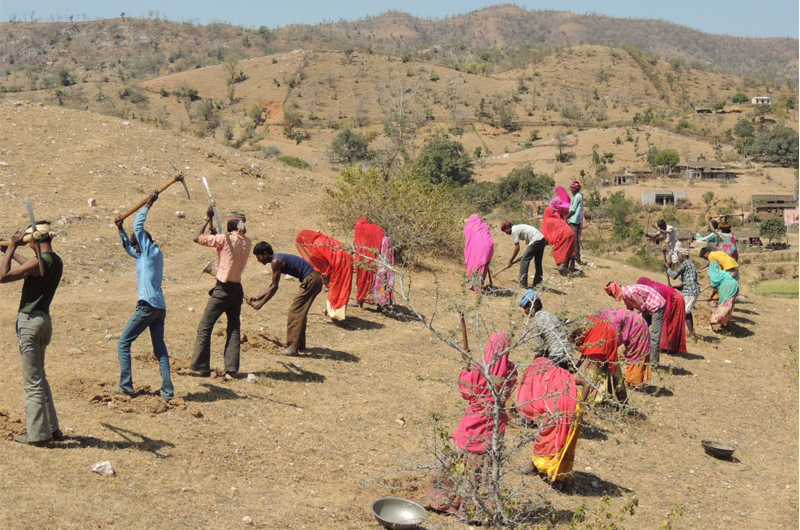
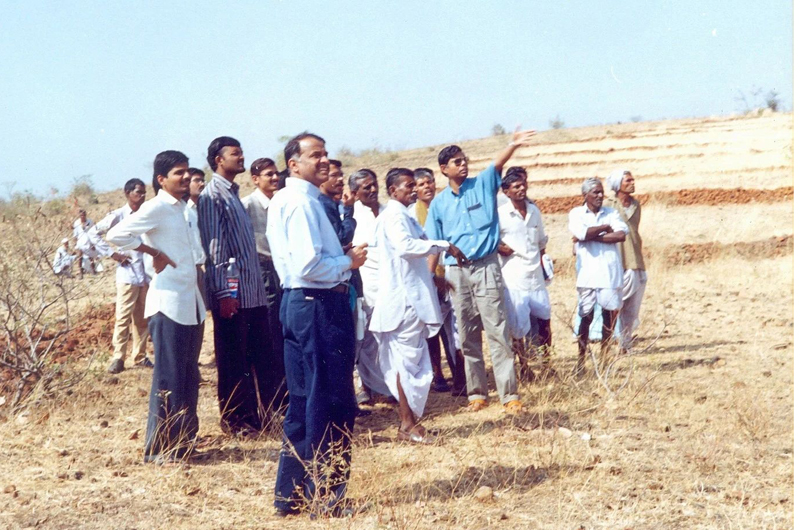
Similarly, I have seen farmers adopt soil and water conservation measures, revive traditional water bodies, and regulate water use through community norms—not because they were taught to, but because their wells had run dry. The change was effected because the crisis was a searing reality. This understanding gives me hope. Because if people can change in moments of crisis, then change is never out of reach. It is not about convincing people to adopt new ideas, attitudes and behaviours. It is about helping them see the cost of continuing as they are—and offering an alternative and a viable pathway to get there.
Quick gains create momentum
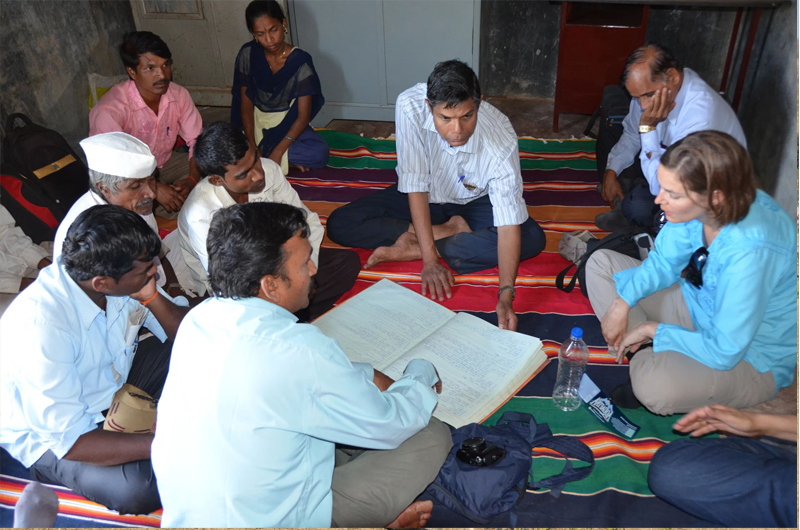
Human beings can endure hardship if they know it will lead somewhere. But if the journey is only about sacrifice, and the payoff is distant or vague, the resolve begins to fade. That is why early successes are critical. When people make small changes—planting trees, building bunds, harvesting water—and see visible results, it renews their energy. It convinces them that their actions matter.
In many of the villages we have worked with, one or two visible structures—a farm pond, a check dam, or a revived well—often become symbols of possibility. They act as anchors of belief, drawing in others and expanding participation. Momentum builds not only through persuasion, but primarily through visible successes. This is why behaviour change must be structured to show early returns, even if modest. Pain is bearable if it is accompanied by progress.
Leadership is less about direction, more about trust
The sustainability of behaviour change depends not only on people’s willingness to act, but on their trust in those asking them to change. If a community perceives leadership as self-serving or selective—if it believes that sacrifices will be inequitably shared or benefits unfairly distributed—resistance grows. And understandably so.
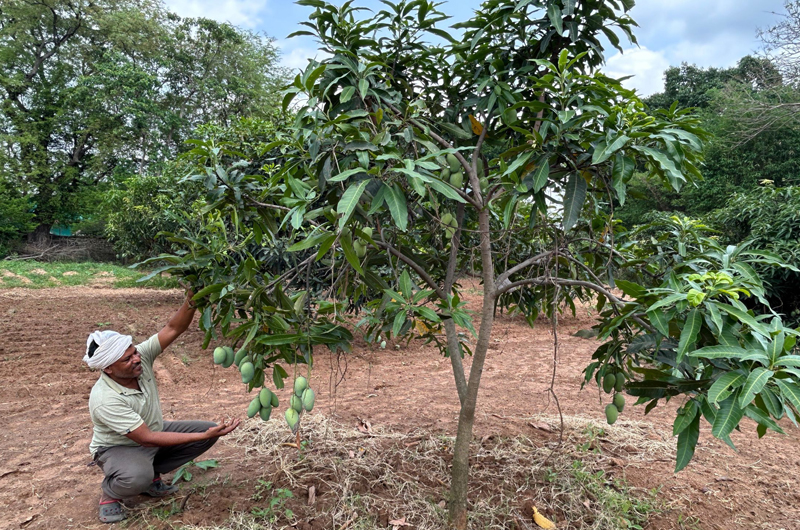
In such environments, what drives change is not executive power, but moral authority. The credibility of a leader rests on how fairly and consistently they are seen to act—whether they listen, whether they walk the talk, and whether they honour the aspirations of everyone, not just a few. In many villages, I have seen how a sarpanch (village head) or a respected elder could sway opinion—not through rhetoric, but through reputation. A leader who is seen as just, who includes the marginalised, and who is known to share in the burdens of others, creates a culture in which difficult change becomes possible. Behaviour change, then, is as much about moral alignment as it is about technical guidance.
Resistance is not a hurdle—it is a part of the process
Every significant change invites opposition. This is not failure. It is a natural response to uncertainty. Newton’s third law—that every action has an equal and opposite reaction—applies not just to physics, but to society. When we try to shift habits, power structures or resource use, it will inevitably unsettle some and empower others. Conflict is not the enemy of change; it is the cost of it.
The key is not to eliminate resistance, but to engage with it. Change agents must learn to listen without defensiveness, to acknowledge fears without dismissing them, and to communicate not just clearly, but credibly. Often, early adopters can serve as bridges—people whose lived experience offers assurance to those who hesitate. Dialogue is essential. Not to win arguments, but to hold space for new possibilities to be heard.
Change cannot outpace the availability of means to make it real
Finally, no matter how urgent the need or compelling the vision or strong the leadership, change will stall if it is not matched by the means to implement it. Aspirations must be matched with resources and tempered by realism. During India’s 1991 economic crisis, we were able to pivot because, despite the enormity of the challenge, we had certain enabling conditions: human capital, a basic governance structure, systems capable of adaptation, and the will to change. The shift was possible not just because it was necessary, but because the capacity to deliver it existed.
Similarly, communities need skills, knowledge, and support systems to initiate and shoulder the efforts and travails of lasting behaviour change. Without this scaffolding, change becomes aspirational at best and purposeless at worst. And so, I remain optimistic. Because time and again, I have seen that the capacity for change lies within people. They do not lack the wisdom nor the will. They simply need to believe that the change is worth the cost—and that they will not be left alone in making it. When people feel seen, supported and understood, they rise.
And so, the work of behaviour change is not to impose will, but to build trust
Not to enforce discipline, but to cultivate belief
Not to demand sacrifice, but to show that something better is possible
If we can do that, then the hardest part of the journey is already behind us.
(Courtesy: WOTR/ wotr.org
 from Webdoux