

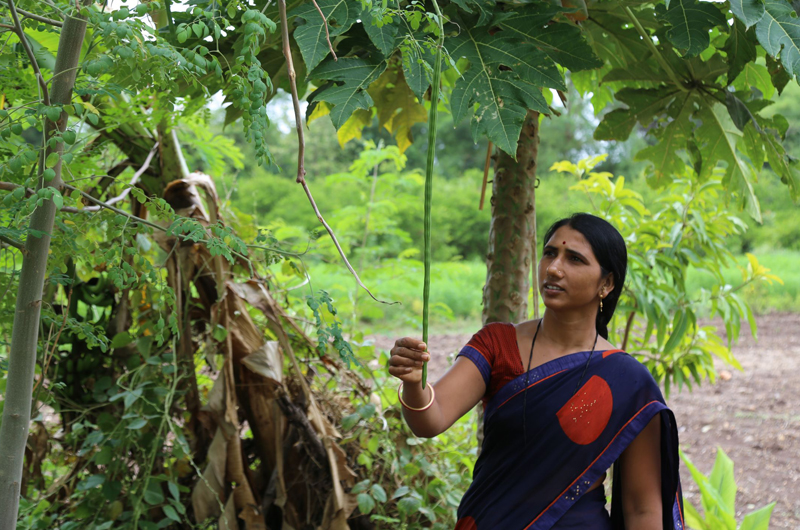
In India, rural life is not defined by its distance from cities, but by its closeness to nature. Here, the land stretches open, and resources are both immediate and revered: clean air, fresh-drawn water, food grown just steps away. Fields stretch outside the windows, firewood is gathered from nearby trees, and meals follow the seasons. This life, lived in harmony with nature and culture — unplanned and deeply rooted- has quietly endured for generations. Yet it is beginning to falter in the face of climate change. This article by Kranti Waghmare and Faraz Rupani highlights the environmental work of rural women as a vital form of leadership that deserves recognition in policy, planning, and global climate discussions. Their stories reveal a profound environmental wisdom, one often invisible in formal discussions, yet deeply impactful on the ground
Globally, approximately 49 per cent of the population experienced an additional 30 days of extreme events (Giguere et al., 2025), a phenomenon previously unobserved by scientists. Long before ‘climate change’ became a catchphrase, the rural communities had started feeling the brunt of the changes, being at the forefront due to their engagement in agriculture making them susceptible to changing climate such as heat stress – one the deadliest extreme events which often goes unnoticed especially in rural areas due to unreported or unrecognised heat related death events. This makes environmental stewardship not just a necessity but a survival strategy, especially for rural communities.
Conservation of natural resources is well recognised for playing a crucial role in mitigating the impact of climate change, particularly for rural communities. Community-based conservation measures have often played a key role in the management of biodiversity resources; however, they differ in how men and women perceive the management and governance of natural resources. Men often engage in practical and action-oriented roles in environmental conservation, focusing on physical tasks and direct interventions. Meanwhile, women tend to contribute through culturally rooted and community-centred approaches, nurturing sustainable practices that are deeply intertwined with traditions and daily life.
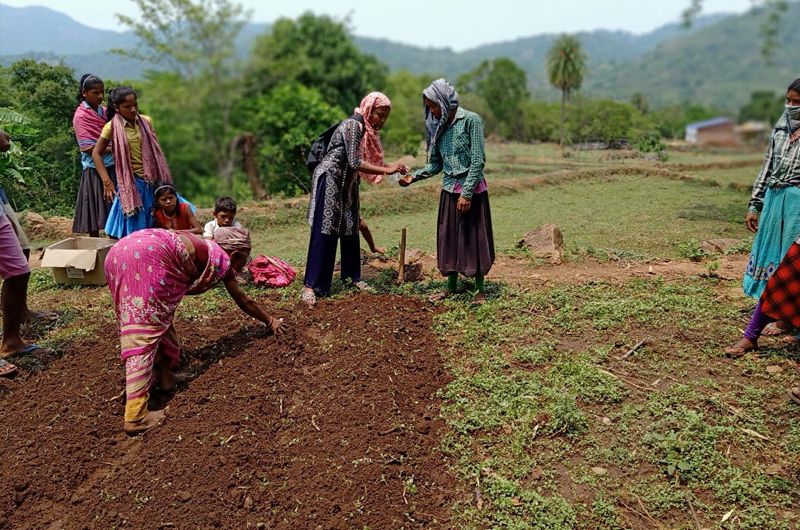
Rural women’s relationship with nature
In global and rural conversations about sustainability, rural women rarely take centre-stage. Their knowledge, rooted in ancestral practices and daily interactions with soil, water, and food, is often seen as informal, unscientific, or merely domestic. Yet, it is precisely this lived experience that forms the backbone of real-world climate resilience. Their daily life follows the changing weather. In summer, she soaks local fruits to make refreshing drinks and dries snacks using just the sun. In winter, she prepares sweet treats made from sesame seeds and jaggery to keep her family warm. During the rainy season, she cooks light meals and uses stored herbs and simple home remedies to keep everyone healthy.
Nothing in her world goes to waste.
Ash polishes brass.
Cow dung feeds the soil.
Leftover rice water finds the plants.
Wet waste converted into compost
Rainwater stored in pots,
Sunlight is used to dry grains
Old sarees converted into quilts.
What many perceive as just household chores are, in fact, age-old ways of caring for the land, passed down through generations of women, from grandmothers to mothers to daughters. In their hardworking, sun-warmed hands, they carry a deep, living knowledge of how to live with nature.
In farming, their role towards decision-making is limited, yet they execute every ecological detail, from sowing to weeding, from harvesting to post-harvest preservation. In animal care, too, they nurture cattle like their own children, keeping cows warm in winter, feeding them seasonally, and understanding their moods and milk cycles like instinct. From their backyard to their kitchen, they don’t separate their environment from their livelihood. For them, it’s the same.
All of this intuition, the seasonal adjustment, and interdependence, is simply a way to preserve nature. One such quiet Environmental conservationist is Saroj Devi, whose story illustrates how traditional knowledge can intersect with sustainable innovation.
Nurturing the land, leading the change
In Parbila, a drought-prone village in Rajasthan, Saroj Devi has spent over two decades farming her small two-guntha plot. Like many rural women, she worked closely with the land but remained unseen in conversations on sustainability. Years of mono-cropping and erratic rainfall had left the soil degraded and her yields uncertain, affecting both her family’s nutrition and income.
In 2024, Saroj was introduced to the Watershed Organisation Trust (WOTR), an organisation dedicated to strengthening rural communities by promoting sustainable land and ecosystem management. Through its work, WOTR helps improve livelihoods and build resilience in some of the most climate-vulnerable regions. Saroj attended the training sessions organised by WOTR on multilayer farming—a technique that grows multiple crops of different heights and varieties on a small piece of land to improve productivity and soil health. She planted fruit trees such as papaya, banana, guava, and lemon, alongside grains and vegetables. The results were significant: her yield increased by nearly 60 kilograms compared to the traditional farming practices she had employed before trying out multilayer farming.
Saroj earned Rs 7,990 from surplus produce—a rise from her previous monthly income of Rs 5,000. Multilayer farming helps improve soil fertility, reduce weed growth, and boost crop productivity. It is an environmentally sustainable practice that supports key natural resources, such as soil and water. Growing different crops at varying heights helps retain soil moisture and enhances nutrient utilisation, thereby reducing the need for chemical inputs. This method conserves resources while increasing yields with minimal environmental harm (Solanki et al., 2024).
Saroj’s farm now produces diverse, nutritious food year-round while restoring the land beneath it. Her quiet leadership is part of a larger, often overlooked movement—rural women applying traditional wisdom and modern techniques to revive their ecosystems. Saroj’s success is not isolated. Across India, women like her are transforming rural sustainability with support from organisations like WOTR.
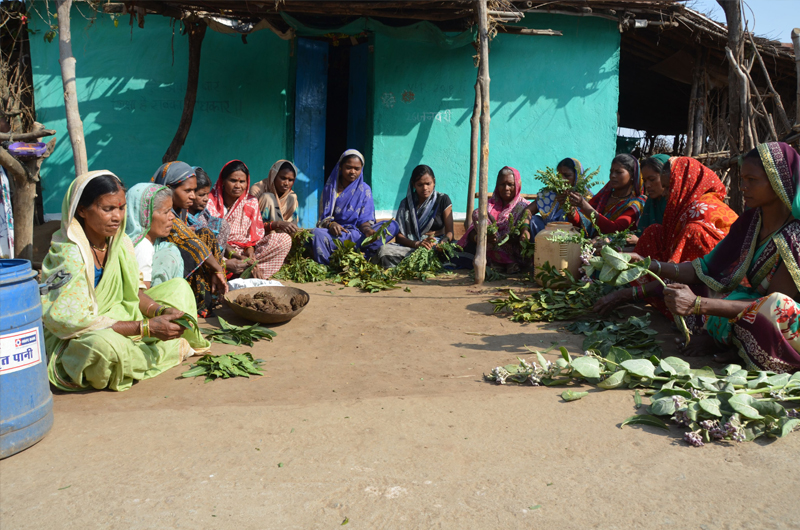
Through training and capacity-building efforts, WOTR has helped thousands of rural women reconnect with and recognise the value of what they have long practised, living in harmony with nature. With just a little guidance, more such women like Saroj began to see that their everyday actions—from preserving seeds to managing water and soil—are influential acts of conservation. Today, they lead watershed development, promote sustainable farming, maintain seed banks, and guide community-based agriculture. Recognising these women is not just a matter of justice—it’s essential to shaping our climate’s future. What was once seen as routine domestic or farming work is now recognised as ecological leadership—nurtured, refined, and amplified through WOTR’s support. They don’t just participate. They lead.
Who truly sustains the Earth?
Not just the scientists with data, nor only the policymakers with plans. It is the rural woman—the one with cracked heels, calloused hands, and generations of wisdom rooted in daily life. They may never call themselves climate activists, but their choices in how they cook, farm, store, feed, and care reflect a lifelong, intuitive commitment to balance with nature. They are not a footnote in environmental conversation. They are at the very heart of it. Their quiet imprint on the land and community has long shaped ecosystems and livelihoods, often unseen but deeply transformative. As we look to our climate future, ‘centreing’ their leadership is not optional—it’s essential.
There are many such inspiring case studies where women leaders are driving sustainable practices and shaping resilient communities as ecological leaders with the power to shape policy, direct resources, and inspire change. Environmental conservation is not just a jargon; it’s an approach of connecting with nature, not just for praise, but with a will and power to reform, re-nurture, and re-thrive our natural resources, and a promise to continue protecting the environment as it should be. To all the environmental conservationists out there, it’s not about how you feel about the environment, it’s about what you do for the environment. So, let’s start with a small step towards environmental conservation within our homes, because the real change happens when you start changing yourself.
(Courtesy: WOTR/ wotr.org. The writers are researchers at W-CReS, the WOTR Centre for Resilience Studies.)
 from Webdoux