

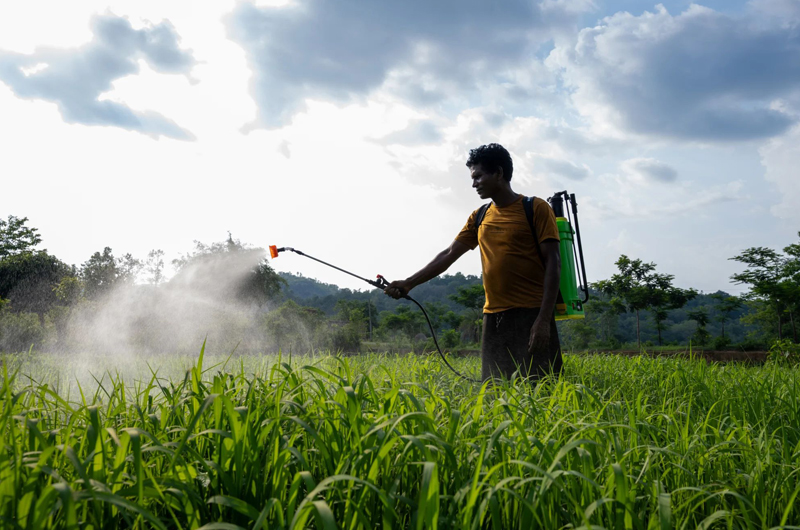
This engaging article by Barasha Das describes how tribal families in Rayagada are moving from subsistence to security, thanks to a WOTR Project.The project operates across 18 villages in Odisha’s Padmapur Block (Likitipadar Gram Panchayat) and Gunupur Block (Bhimpur Gram Panchayat). As part of the project, 89 families have started kitchen gardens, growing 14 types of vegetables and fruits across all seasons. A distinctive feature of WOTR’s project implementation is its ‘beneficiary contribution model’, which ensures that recipients invest a nominal amount rather than receiving aid entirely for free. Such stories are part of a quiet revolution—rooted in the soil, led by communities, and guided by hope
On a warm January afternoon,Junesh Mandal and his neighbours sit on a charpoy under the shade of a tree, remembering the journey that brought them to Chhagharia.Eighteen years ago, six families from Odisha’s Gajapati District migrated to Rayagada in search of land and livelihood. Over time, they built a hamlet of their own, naming it Chhagharia—literally, ‘six households’. Today, sixteen families live here, but the struggle continues.
“The land was steep and dry, and the stream from where we could get water was far away,” Junesh recalls. “We couldn’t afford a pump. Most of us worked as agricultural labourers or in cashew plantations. Farming wasn’t an option. Our annual income didn’t cross Rs 30,000.” Rayagada, located in Odisha’s Northeastern Ghat agro-climatic zone, is home to severaltribal communities,including the Saora.Though it lies far from the coast, the district is highly climate-sensitive.Rising temperatures, erratic rainfall, and degraded natural resources make life hard for farming families.
In 2024, things started to change in Chhagaria. Under the Increasing the Resilience of Small Farmer Communities through Participative Natural Resource Management and Strengthening of Livelihood Models in Rayagada District Project, WOTR (Watershed Organisation Trust), with the support of Andheri Hilfe, introduced a diversion-based irrigation (DBI) system. Water from a stream 700 metres away is now stored in a tank that holds 38,025 litres, enabling Junesh and others to irrigate their land and return to farming. This initiative has supported year-round farming, and more land has become cultivable.
A baseline study revealed that over 94 per cent of the households in Rayagada fall below the poverty line, earning less than Rs 27,000a year. Almost 70 per cent of agriculture in this semi-arid landscape is rain-fed, making it highly susceptible to the changing climate. The last two decades have brought several instances of high-intensity rainfall, prolonged dry spells, and soaring summer temperatures, surpassing 40° C for over a decade. These relentless cycles of extremes have shattered agricultural productivity and strained health, livelihoods, and the very fabric of the community’s survival. The red and lateritic soil,which is prone to erosionand has poor water retention, adds to their woes, making each growing season an uncertain gamble.
The water crisis is not just about farming. In Kurundi Village, Chaitanya Sadar shares a daily struggle: “There’s a community tank here, but in summer the motor yields barely 300–400 litres of water—for all 59 households. How can we live on that?” WOTR’s strategy begins with conservation, retaining rainwater, improving soil moisture, and protecting the terrain by developing watershed structures. The measures include field-bunding, deep continuous contour trenches, check dams, gully plugs, loose boulder structures, and land-levelling. Where the terrain is too steep, irrigation systems like DBI andlift irrigationhelp bring water to the fields. Micro-irrigation via sprinklers and drip ensures water is used efficiently. This work not only secures water, it creates local jobs in construction and maintenance, offering income during lean months.
The project operates across 18 villages in Odisha’s Padmapur Block (Likitipadar Gram Panchayat) and Gunupur block (Bhimpur Gram Panchayat). As part of this initiative, field bunding has been implemented across 1,700 running metres (RMT), with 2,717 RMT of continuous and staggered contour trenches. Stone bunding covers over 2,500 RMT, supported by 234 loose boulder structures and 24 earthen gully plugs. Additionally, a check dam now provides irrigation access to 12 farming households, benefiting 15 hectares of cropland. Five DBI systemssupport 60 farmers, irrigating 20 hectares of farmland. Micro-irrigation has been implemented across 8 hectares, conserving water and improving crop productivity for eight farmers. Four lift irrigation systemsirrigate eight hectares, ensuring year-round farming for 18 farmers.
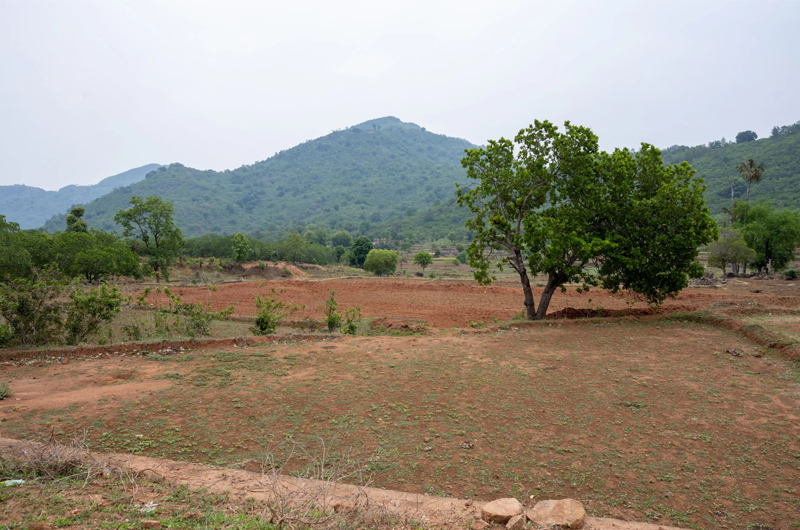
instances of high-intensity rainfall, prolonged dry spells, and soaring summer temperatures.
Cultivating self-reliance: from water to food security
Once water is secured, the focus shifts to farming—more sustainably, and with resilience. WOTR supports farmers in adopting practices that are adaptive to changing climates: the system of rice intensification, cultivation ofdrought-resistant crops, organic inputslike vermicompost and jeevamrit, soil testing,and integrated pest management.
In Chhagharia, three key interventions have been introduced, leveraging the advancements made by the DBI: land levelling, climate-resilient agriculture, and kitchen gardens.Land-levelling was the first step towards productivity. “A mechanical excavator was given to the three beneficiary families for 24 hours each. We finished our land levelling before time and used the remaining hours to help our neighbours level their land. We live together, we struggle together. They may not be beneficiaries this year, but when one of us gets a chance, we ensure it helps us all,”shared Junesh. As a result of the land-levelling activity, 15 hectares of degraded land has been converted into cultivable land.
As part of the project, 89 families have started kitchen gardens, growing 14 types of vegetables and fruits across all seasons. Furthermore, across 84.5 acres,communities have adopted climate-resilient agricultural practices, and many have embraced multilayer farming techniques. Agro-horticultureinitiatives, integrating orchards of cashews, amla, tamarind, and pineapple covering 20 acres,have provided immediate food security and sustained financial stability to 20 households. The project also regenerates four hectares of degraded land into forest. Soil and moisture conservation activities are underway here as well.
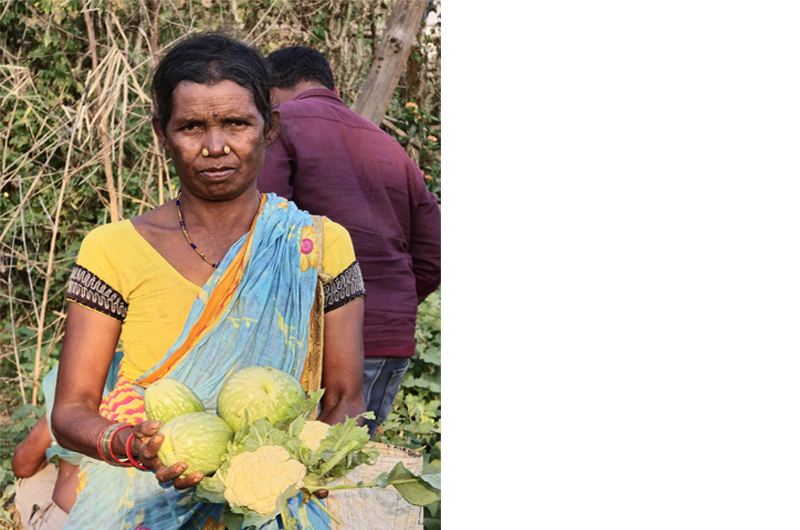
WOTR supports farmers in adopting practices that are adaptive to changing climates.
Diversifying incomes: earning beyond agriculture
Farming alone is not enough to meet household needs. Many landless families depend on manual labour or migrate to cities like Visakhapatnam, Hyderabad, and Bhubaneswar. Migration is often unplanned—many youth drop out of school and leave for odd jobs. Women shoulder the burden of both farm work and construction. Forest produce like tamarind, mahua, and char seeds offer seasonal income, but prices are poor, and risks are high. To reduce migration and support landless households, the project is enabling new livelihood options: goat rearing, petty shops, skill-based trades, and group enterprises.
Sulam Sabar, a marginal farmer from Kurundi inLikitipadar Panchayat, once worked in Tamil Nadu. A marginal farmer with just half an acre of cultivable land and no formal education once struggled to provide for his family of six. When harvests failed, as they often did, migration became his only option for survival. In 2022, WOTR supported him with four goats and a shed.With training on feed, vaccination, and breeding, his herd has grown to 12 goats. He has already earned Rs 41,000 by selling five goats. So far, 42 goat rearing units have been initiated under the project. Families also receive support in marketing and accessing veterinary care. Other interventions include ten pulverisers, seven grocery shops, eight carpentry units, and four mushroom sheds, which offer income to families with limited land or members with disabilities.
The smiling face of forty-year-old Gaba Sagar,sitting in his small grocery shop in Piridipanga Village, Padmapur Tehsil, subtly conceals his past struggles due to deformities and joblessness. “I had spent half my life with just the disability pension I receive from the government scheme. My family loved me, but deep down, I always felt like I only existed, living in their sympathy,” he recalls. When WOTR offered him an opportunity to start a grocery shop in 2021, he had to contribute Rs 2000as a participatory amount per the policy. “My family refused to help. They didn’t believe I could do it, nor did they trust NGOs,”he said. Determined not to let go of the chance, he borrowed the amount from a friend. Within months, he had repaid the debt with interest. “Today, I have two post office savings accounts, one with Rs 18,000and counting. Now my family believes in me,” he added. His shop, stocked with everyday essentials, edible goodies, and petrol, draws a steady stream of customers, securing his independence and dignity.
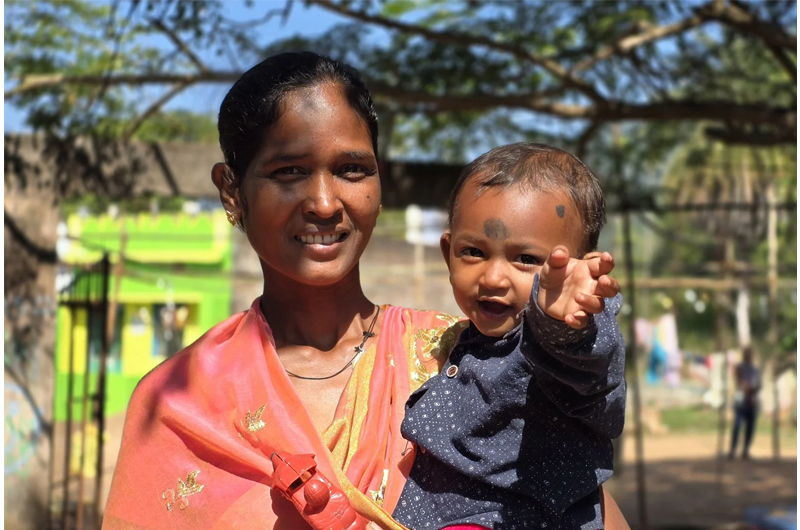
Women leading local transformation
In tribal regions like Rayagada, women often bear the brunt of poverty—caring for children, farming, collecting water, and working as labourers. But they are also becoming the strongest agents of change.Malnutrition is rampant in the region – over 60 per cent of children under five are severely underweight, and nearly 88 per cent suffer from moderate to severe stunting—and the lack of awareness among mothers compounds this silent crisis. Education is a distant dream for many children, as middle and secondary schools are miles away, discouraging regular attendance.
The mahila pravartak initiative trains women to be village resource persons. They participate in project planning, manage community discussions, and promote nutrition, agriculture, and water practices. The women are enabled to move beyond traditional roles with access to more productive and remunerative livelihoods, enhancing their lives and their families’ well-being. Self-Help Groups (SHGs) engage in savings, credit, and economic activities, while the federated body—Sanyukt Mahila Samiti—advocates for their collective interests. Programmes such as child growth monitoring, anaemia detection camps, and nutrition awareness sessions have been introduced. Village development committees (VDCs) oversee project implementation, with members trained in planning and resource mobilisation. Exposure visits foster learning, and public felicitation programmes acknowledge contributions to development.
With her toddler nestled on her lap, 32-year-old Sukumari Raita gathers the women of Tuagudi Village, their children in tow, for the weekly gram sabha (village council). The meeting takes place on the veranda of an old concrete structure—once a school, now abandoned due to a lack of teachers. A graduate of Berhampur University, Sukumari once worked with social welfare NGOs before stepping away after marriage. When WOTR expanded its work in Tuagudi, her experience made her a natural choice for the role of Wasundhara Sevika. Now, she leads two village development committees, balancing duty and motherhood with quiet determination.
At the gathering, Sukumari checks the children’s growth, advises mothers on nutrition, and collaborates with an anganwadi (nursery) worker to support lactating mothers. Beyond health, she speaks about hygiene, sanitation, kitchen gardens, clean cooking fuels, and water conservation, touching every aspect of daily life. “It took me a long time to create awareness among the women. During the day, they work in the fields, so I visited them door-to-door in the evenings. At first, they ignored me, but I refused to give up. Slowly, they began to listen, and now they understand and follow the guidance,” she says with quiet pride.
Growing stronger, together
A distinctive feature of WOTR’s project implementation is its ‘beneficiary contribution model’, which ensures that recipients invest a nominal amount rather than receiving aid entirely for free. The intent is not to exclude those unable to pay but to instill a sense of ownership and responsibility. Even a minimal investment fosters commitment, encouraging beneficiaries to maximise the benefits, utilise resources efficiently, and ensure the initiative’s success.
This approach has proven effective. By the end of the project period, locals acquire the necessary resources, skills, and social responsibility, reinforcing the long-term impact of the projects. They also develop the ability to align with government schemes, ensuring continued progress. Since its initiation in 2021, the project has benefited 900 families in Bhimpur, predominantly from tribal communities. From Piridipanga to Kurundi to Chhagharia, the people of Rayagada are reimagining what resilience looks like. It’s visible in the bund that keeps soil from washing away. In a goat shed built beside a mud house. In a hand that turns on a tap and finds water. In a woman who speaks up in a village meeting. In a child who stays in school because the family no longer has to migrate.
(Courtesy: WOTR/ wotr.org. The writer is an independent journalist and reports often on environment, climate change, indigenous knowledge and culture.)
 from Webdoux