

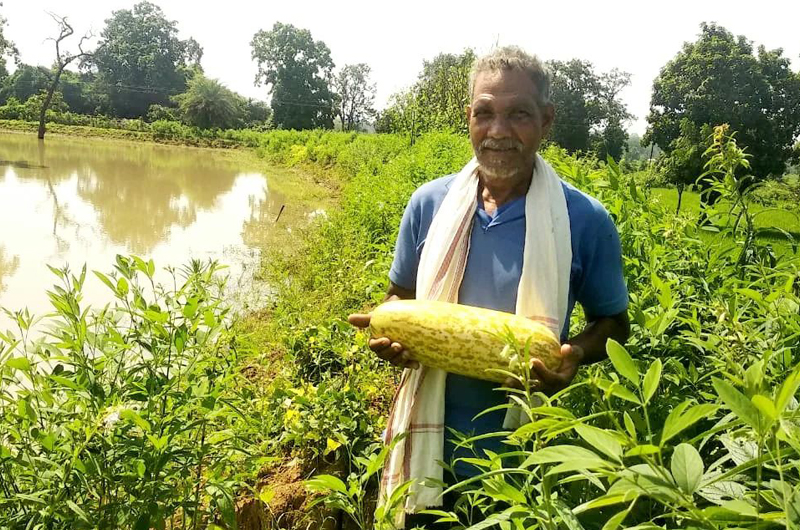
WOTR’s initiative, Holistic Development of Tribal Communities in Gadchiroli through Improved Irrigation Facilities and Alternate Sources of Livelihood, supported by Hindustan Unilever Foundation, is proving to be a great success. With declining forest cover, erratic rainfall, land degradation and falling agricultural productivity, the objective is to motivate farmers to make a shift to diversified and sustainable farming, breaking free from generations of paddy mono-cropping. The results are visible on the ground, with many women leading the change. This article is by Shalmali Bhagwat, WOTR Communications
It started with curiosity, and a bus ride. In September 2025, 215 farmers from Etapalli Taluka in Maharashtra’s Gadchiroli District travelled to Wasada Marka Village in neighbouring Chandrapur District to witness something remarkable — a 70-acre orchard flourishing in dryland conditions. With over 32,000 fruit trees, it stood as living proof that even in challenging terrain, systematic orchard management can ensure sustainable livelihoods. The gram sabha (village assembly) of Wasada Marka Village had developed the orchard under the Mahatma Gandhi National Rural Employment Guarantee Act (MGNREGA).
This visit marked the beginning ofWOTR’s new initiative, Holistic Development of Tribal Communities in Gadchiroli through Improved Irrigation Facilities and Alternate Sources of Livelihood, supported by Hindustan Unilever Foundation (HUF). Armed with newfound knowledge and with support from the project, they turned their learnings into action, inspiring a shift towards diversified and sustainable farming, breaking free from generations of paddy mono-cropping.
The results are visible on the ground, with many women leading this change. In Tambada (S), Sharda Durva has planted 65 mango and jackfruit saplings, received from WOTR, across 0.5 acres of her land. She anticipates a yield of 4–6 tonnes of fruit in the coming years and is intercropping vegetables and pulses to ensure a steady income in the meantime. In Bidri Village, Suman Gawade built a wire fence to protect her mango saplings from grazing animals, a practice she learned during an exposure visit.
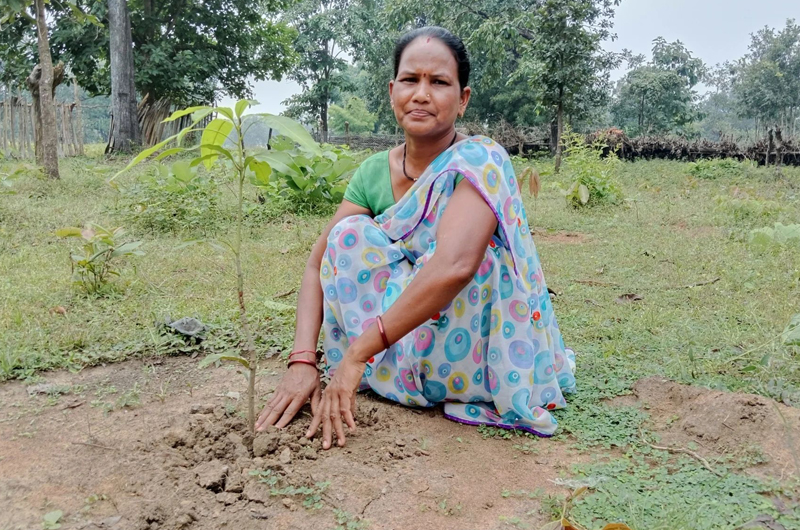
In Pandevahi, Yesi Dassa Madavi, a single mother of three, after attending the first exposure visit, now ensures her children get acquainted with modern agricultural practices by involving them in all exposure visits organised under the project. These early efforts mark only the start — a glimpse of what’s to come as tribal farmers in Gadchiroli move toward a more secure and sustainable future.
Gadchiroli District is blessed with dense forest cover. The district is known for bamboo, tendu leaves and paddyas its main agricultural produce, along with jowar (sorghum), linseed, tur, and wheat. A large tribal population depends on forest produce and agriculture for daily income. However, the forest cover is depleting rapidly. According to a study by Current World Environment, forest cover declined from 74 per cent in 1989 to 68 per cent in 2019, with total land degradation amounting to 1,045.51 sq km between 1989 and 2019. As a result, the average annual household income remains as low as Rs 35,000 to Rs 45,000, severely affecting survival and food security.
The income from both agriculture and forest produce is uncertain, making it essential to develop diverse farming systems such as agroforestryand agro-horticulture. For these systems to thrive, consistent water availability is critical—but even this is becoming unreliable due to changing rainfall patterns. In recent years, drastic variations have been observed in rainfall. The average number of rainy days—around 79 earlier—has shown a declining trend over the past three decades in Gadchiroli. The WOTR-HUF project aims to address these interlinked challenges in this environmentally sensitive region.
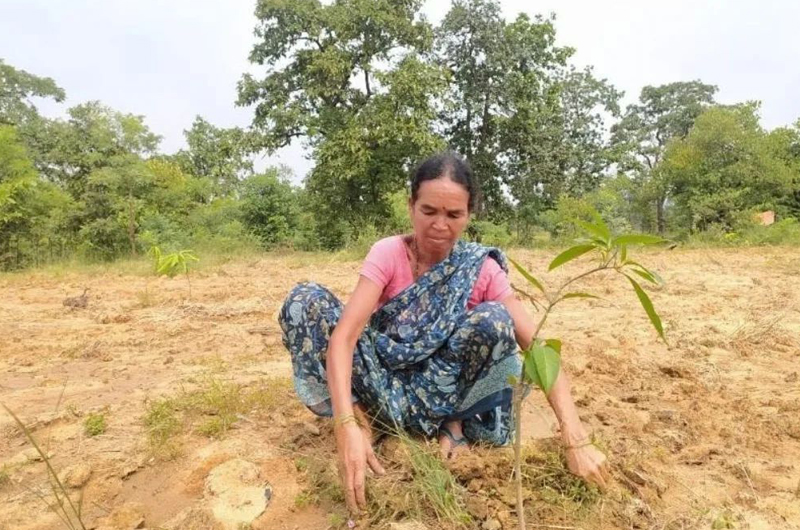
Encouraging fruit tree plantations to break the cycle of mono-cropping is just the beginning. The collaboration aims to improve the quality of life of the tribal population by creating richer livelihood opportunities across 30 villages, leading to self-sustainability. Speaking about the partnership, Prakash Keskar, executive director at WOTR, said: “Gadchiroli is a region blessed with rich natural resources. However, communities here are increasingly bearing the brunt of climate change: from declining forest cover and erratic rainfall to land degradation and falling agricultural productivity. With over 32 years of experience working across Maharashtra, WOTR considers Gadchiroli one of its key focus areas in the state. Our collaboration with the Hindustan Unilever Foundation will help drive meaningful change in the region and foster sustainable development in the face of these challenges.”
Project implementation will take place in a phased manner through a structured, step-by-step strategy:
a) Ensuring water security: Soil and water conservation, along with rainwater harvesting measures, such as deepening and creating new bodis (traditional ponds), will be undertaken to protect and conserve natural resources. These measures will help prevent soil erosion, increase fertility, and conserve water.
b) Enhancing irrigation potential: Irrigation coverage in project villages will be improved to enable year-round cultivation. This will enhance crop yields, improve food security, and reduce dependence on erratic rainfall.
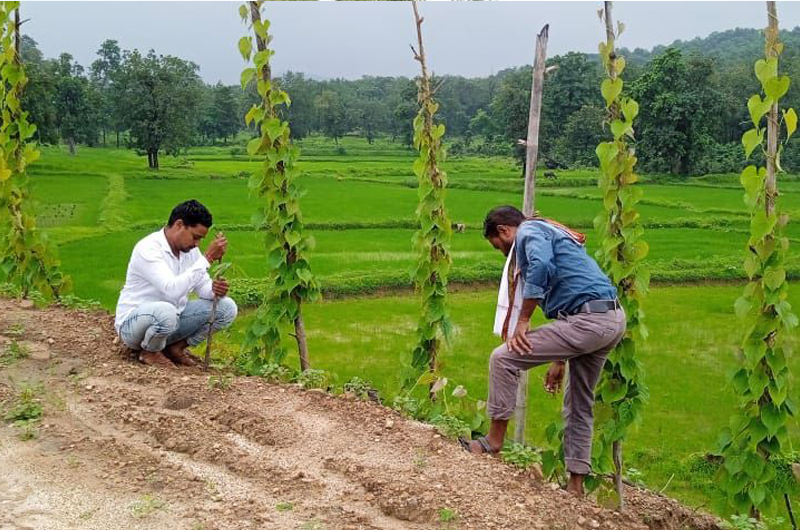
c) Enhancing agricultural productivity and income: Climate-resilient, sustainable agricultural and farm-based livelihood practices will be promoted to help farmers adapt to changing climatic conditions. These include the system of crop intensification, inland fisheries, crop rotation, intercropping and agroforestry. Horticulture, along with agricultural diversification, will be encouraged to improve nutrition and increase household income.
d) Income and livelihood security: Income-generating activities—especially for poor and vulnerable groups, particularly women—will be supported. These include beekeeping, animal husbandry, handicrafts, and small-scale enterprises. Training, resources, and market linkages will help lift people out of poverty and ensure livelihood security.
In the next three years, the project aims to:
- Create an additional 4.8 billion litres of annual water harvesting capacity through 600 water structures
- Increase annual agricultural (farm and non-farm) production by 2,106 tonnes (including paddy, fruits, vegetables, fish, and meat)
- Bring 2,400 hectares under improved cultivation practices such as climate-resilient agriculture and horticulture
- Engage 1,200 households in off-farm interventions to diversify livelihood options
Talking about the collaboration, Shraman Jha, CEO, Hindustan Unilever Foundation, said: “Empowering communities in the rural areas of Gadchiroli District, in collaboration with our partners and local champions, is far more than a one-off programme. It is a transformational commitment to inclusive growth, resilience, and dignity. We aim to do this through diversified livelihood opportunities powered by sustainable water solutions—to nurture a future where every drop counts and villages thrive.”
For regions like Gadchiroli, which are blessed with natural wealth but are facing the consequences of climate change, the time to act is now.
(Courtesy: WOTR/ wotr.org)
 from Webdoux