

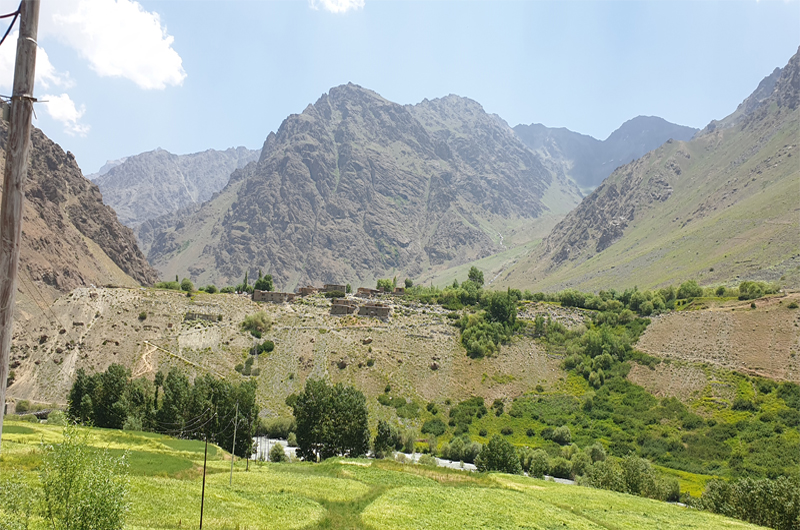
Afsana Rashid takes us with her as she travels through the Kargil area, revelling in the stunning landscapes comprising towering peaks and scenic valleys. Whether it is the picturesque landscape of Matayein, the icy winds and harsh cliffs of Gumri, or the second coldest inhabited place in the world, Drass, travelling through these remote regions gives one the feeling of having stepped into a lunar landscape, far, far away from Planet Earth, says Rashid
Rugged and lofty mountains, steep slopes and cliffs – the terrain is tough. Yet, the view is spectacular, with curved roads and vast open meadows, en route to the famous Zoji La Pass in Ladakh. The high-altitude mountain pass (approximately 11,575 feet above sea level) that connects Kashmir Valley with Ladakh Union Territory on the Srinagar-Leh National Highway is of strategic importance too. The breathtaking scenery compels travellers to pause and click pictures, make reels or short videos, and sip tea while inhaling the fresh air.
As the picturesque landscape of Matayein draws near, gushing streams and steep slopes offer more snapshots of Nature’s calmness amidst ruggedness. Many families of the Bakarwal Community from Rajouri District in Jammu Region can be seen grazing their livestock on the mountains during summer. When the nomadic community, which traditionally rears goats and sheep, find suitable pasture for their animals, they set up their tents and settle down in the vicinity.
Abdul Khaliq, whose family is living in one such tent, finds it tough to take care of the family’s routine needs, but he still maintains the deeply-rooted way of life. “This is our identity and we love our work,” says the middle-aged Khaliq, but adds candidly, “it’s also a fact that our children no longer want to do it.” Shaped by centuries of seasonal migration, the community moves around with their livestock to fresh grazing grounds. Though the seasonal migration is associated in their minds with cultural pride and dignity, they face a host of challenges too, including harsh weather, difficult terrain, livestock-related issues and gaps in their children’s education.
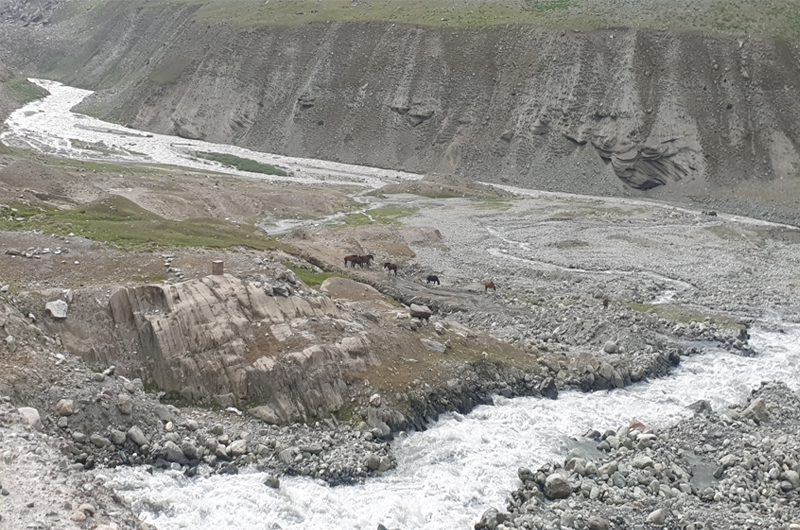
Jammu Region can be seen grazing their livestock on the mountains during summer.
As compared to Matayein, Gumri greets visitors with icy winds and harsh cliffs sparsely clothed in vegetation. But for Mohammad Amin, a shawl vendor from Kupwara in north Kashmir, the place offers enough to sustain his family. Amin finds it easy to get customers just a stone’s throw away from the tent he has pitched for his family, as this is tourist season and the place is en route to Leh. “This is peak time here and I am able to earn a livelihood. We will leave this place in November when there will be chilling winds and snowfall. We will return when the weather improves in March-April,” he says.
Pandrass, too, experiences extremely harsh winters and many people temporarily relocate to warm areas. “We leave in November and return by April. It is very cold here,” said a local tea-stall owner, busy catering to a group of local tourists. Pointing towards his piece of land, he commented that the crop (barley) was almost ready to be harvested. “Once the harvest is complete, we will begin preparations to relocate, especially the older folk, as the winters here are very harsh,” he said. Barley, popularly known as jau, is a staple crop in Kargil.
As Drass draws closer, a modest market hub on the Srinagar-Leh highway offers an opportunity to relax and rejuvenate, especially after a long and exhausting day’s travel through steep mountain passes and valleys. Called the Gateway to Ladakh, Drass is known as the second coldest inhabited place in the world, where the temperature plunges to minus 45 degrees Celsius. A local tea-stall owner exclaimed, “You will find nothing much here except pahaad aur pather (mountains and stones).”
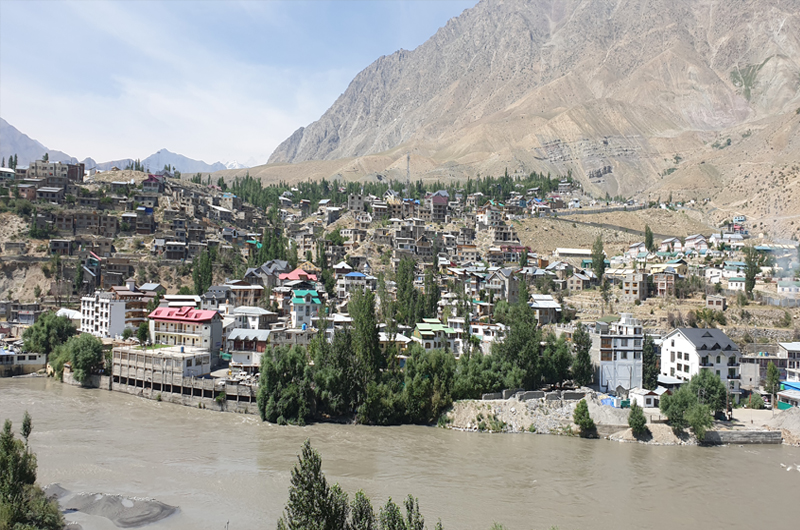
Mashkoo Valley, lying at an altitude of over 3,300 metres, is, however, a different cup of tea. The blazing yellows, blues and purples of wild flowers dancing in the pleasant breeze and filling the air with fragrance leave visitors speechless. Though the terrain is steep and the mountain roads narrow, clear blue skies and clean, gushing streams make this Valley of Wild Flowers a scenic, serene and elegant place.
The Kargil War Memorial, built in honour of the soldiers who fought the 1999 Kargil War, is located amidst the Tiger Hill, Tololing and Point 4875 (Batra Top) – all key battlegrounds during the War. The Memorial receives many visitors. Every year, Kargil Vijay Diwas is celebrated on July 26 to mark India’s victory against Pakistan and in honour of the bravery and sacrifice of Indian soldiers. Kargil is home to three magnificent 7th Century Maitreya Buddha statues, each carved into cliffs and mountainsides, reflecting the region’s ancient Buddhist heritage. On the whole, travelling through these remote regions gives one the feel of having stepped into a lunar landscape, far, far away from Planet Earth.
(The writer teaches at the University of Kashmir’s Media Education Research Centre.)
Editor’s note: Kargil is a city in Indian-administered Ladakh. It is the joint capital of Ladakh, an Indian-administered union territory. It is also the headquarters of the Kargil District. It is the second-largest urban centre in Ladakh after Leh. The scenic Kashmir Region draws visitors from India and across the world. For many Indians, a visit once in a lifetime is almost a must. And, as we have seen, after the Pahalgam terrorist attack in April this year in which 26 civilians were killed, and after the successful Operation Sindoor, tourists are back again in these areas – a display of the extraordinary resilience Indians have, and also thanks to nature’s unparalleled beauty in these parts.
 from Webdoux